
Key Points:
- Brain games boost attention, memory, and problem-solving through fun interactive play.
- Combining movement with thinking activities keeps children engaged and mentally alert.
- Regular practice builds stronger concentration skills that support learning and daily tasks.
Have you noticed your child having trouble sitting still or finishing tasks without getting distracted? Building focus early helps set the foundation for better learning, memory, and problem-solving skills in the future. Brain games for kids make sharpening attention fun. With the right activities, children can practice concentration naturally, without feeling like it’s work.
In this blog, we’ll share five exciting games to improve focus and concentration for kids. These games were picked to engage young minds, strengthen thinking skills, and include some movement. Whether you’re looking for fun games for kids or easy concentration exercises, there’s something here for every age and interest. Let’s dive in and turn playtime into a chance to boost focus while having fun!
1) Math Simon Says

Age Range: Grades K–5
Special Considerations: Space to move
Math Simon Says is a clever twist on the classic “Simon Says” game. Kids must pay close attention to instructions, but the challenge comes when math problems are added. For example, “Simon says jump on one foot 3 + 1 times” or “spin around 2 × 3 times.” Not only are children practicing focus, but they’re also reinforcing arithmetic skills.
Procedure:
- Choose one person as “Simon.”
- Simon gives instructions such as “touch your toes” or “spin in a circle.”
- Kids follow only when Simon says “Simon says…”
- Mistakes result in elimination, and the last player becomes Simon.
Why it Works:
Research by Hillman et al. (2018) shows that activities combining movement with cognitive tasks improve attention and working memory. Math Simon Says also turns problem-solving into a game, making learning active and enjoyable.
2) Red Light Green Light
Age Range: Grades K–3
Special Considerations: Outdoors
This classic playground game is more than just fun, it enhances self-regulation and concentration. Kids must control impulses, pay attention to the “traffic light,” and make quick decisions to move or stop.
Procedure:
- One person becomes the “traffic light.”
- When the traffic light shouts “green light,” kids move toward them; “red light” means stop.
- Variations can include “yellow light” for slow motion or fun movement instructions.
- The first player to reach the traffic light wins.
Why it Works:
According to a study in Frontiers in Psychology (2019), games that require children to monitor signals and respond accordingly strengthen executive function skills, which are key for focus.
3) Sudoku: Concentration Challenge
Age Range: Grades 5–8
Special Considerations: 5–10 minutes prep
Sudoku is a well-known concentration game that trains sustained attention, pattern recognition, and critical thinking. Kids must carefully place numbers in rows, columns, and boxes without repetition.
Procedure:
- Use a printed Sudoku board or an online platform like sudoku.com.
- Fill in numbers 1–9 in each box, row, and column without repeating.
- Challenge students with different difficulty levels to maintain engagement.
Why it Works:
Puzzle Genius (2021) highlights that Sudoku exercises working memory and cognitive flexibility. When kids visualize numbers in their mind, they create mental frameworks that strengthen attention and problem-solving skills.
4) Math Bingo
Age Range: Any
Special Considerations: 30 minutes of preparation
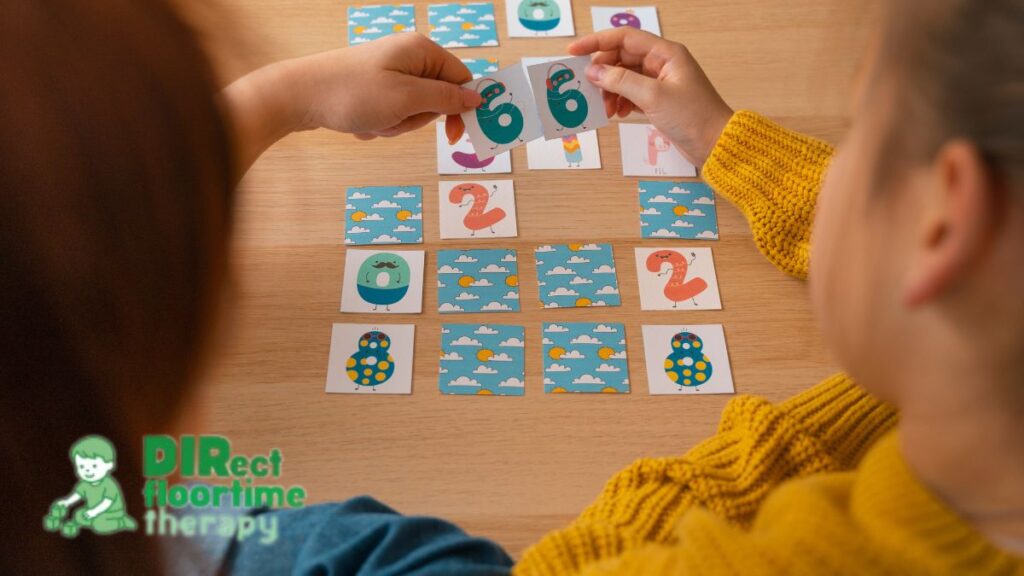
Math Bingo combines problem-solving with attention to detail. Kids listen carefully for answers and solve problems to mark their cards.
Procedure:
- Provide each player with a Bingo card containing math problems.
- Call out the answers; kids solve the problems and mark the space.
- First to mark five in a row wins.
Why it Works:
According to Duffy (2020), games that combine cognitive challenge with active participation enhance memory retention and concentration. Math Bingo also adds an element of healthy competition that keeps kids engaged.
5) Word Chain
Age Range: Any
Special Considerations: None
Word Chain develops verbal memory, sequencing, and focus. Players take turns adding words starting with the last letter of the previous word. For example: “apple → elephant → tiger.”
Procedure:
- Start with a random word.
- Each player recites all previous words before adding a new one.
- Game continues until a player successfully completes the chain.
Why it Works:
Word games like this strengthen working memory and attention. A study by the Child and Adolescent Health Service (2021) found that language-based games improve concentration while reinforcing vocabulary.
Why Helping Kids Improve Focus Matters
Developing strong focus is more than just sitting still, it’s a skill that unlocks learning, creativity, and problem-solving. Here’s why improving focus is so important and how kids can benefit:
- Focus is a Brain Spotlight: When children concentrate on one task, their brain shines a spotlight on it, helping them fully absorb what they see, hear, or do. This can be listening to a story, drawing, or completing daily routines.
- Learning Sticks: Focused attention helps kids retain new information longer and apply it in different situations. Studies show that children with stronger attention skills often perform better academically (Posner & Rothbart, 2007).
- Better Task Completion: Kids who can sustain focus are more likely to follow directions, finish homework, and complete chores efficiently.
- Problem-Solving and Decision-Making: Concentration allows children to think through challenges without getting distracted, boosting critical thinking and confidence.
- Individual Attention Styles: Every child’s focus develops at their own pace. Some may have naturally longer attention spans, while others need playful exercises and gentle practice to strengthen their concentration.
- Special Needs Consideration: Children with learning differences or disabilities might find it harder to maintain focus. Fun, structured activities can help train their brains in small, achievable steps.
- Energy Management: Kids often struggle to focus when overstimulated or restless. Short physical breaks, movement-based games, or outdoor play can reset their attention and improve engagement.
- Consistent Practice Pays Off: Regularly practicing focus-building activities transforms concentration from a challenge into a strength, making schoolwork and daily tasks easier and more enjoyable.
By understanding why focus matters and providing engaging ways to improve it, parents and caregivers can help kids develop skills that last a lifetime.
Additional Brain Games for Kids
Here’s a quick reference table for other engaging concentration games:
| Game | Age | Focus Area | Notes |
| Zip, Zap, Zop | Grades 5–8 | Visual and auditory attention | Pass a pattern in a circle to challenge quick reaction and eye contact |
| One Word Story | Any | Collaborative attention | Build a story word by word to develop active listening |
| Silent Sorting | Grades 3+ | Categorization, problem-solving | Sort picture/word cards without speaking |
| Decipher the Code | Grades 3+ | Logic and attention | Create and solve secret codes to challenge memory |
| Category Concentration | Any | Vocabulary and focus | Name words in a category without repeating |
All of these activities also double as concentration games for kids, creating engaging ways to strengthen mental skills while having fun.
How to Maximize Focus in Games
- Set clear rules: Kids need to know boundaries to maintain attention.
- Keep sessions short: Younger kids have shorter attention spans. Start with 10–15 minutes.
- Use variation: Switching between physical and mental games prevents fatigue.
- Praise effort: Recognition for participation encourages sustained focus.
- Integrate into routine: Consistency helps children associate fun with focus-building.
Fun Facts & Statistics
- Hillman et al. (2018) found that regular physical activity can improve attentional control in children.
- Government of Western Australia Department of Health notes that jigsaw puzzles improve attention, problem-solving, and fine motor skills.
- A 2020 study by Duffy showed that math-based games improve working memory and concentration in elementary-aged kids.
- Frontiers in Psychology (2019) reported that games requiring response inhibition enhance cognitive flexibility and task persistence.
FAQs
1. How can I know which concentration game is right for my child?
Choose a game based on your child’s age, interests, and attention span. Start simple, then increase complexity as focus improves.
2. Can these games help children with short attention spans or ADHD?
Absolutely. Games like Memory, Red Light Green Light, and Math Bingo train executive function and impulse control, which are key challenges for kids with ADHD.
3. How often should kids play focus games?
Daily sessions of 10–20 minutes can show noticeable improvements. Balance with free play and outdoor activity.
4. Do these games improve academic performance?
Studies suggest that attention and working memory skills developed through brain games for kids support reading, math, and problem-solving in school (Hillman et al., 2018; Duffy, 2020).
5. Can older kids benefit from these games too?
Yes! Many concentration games can be adapted with complexity. Sudoku, Word Chain, and Decipher the Code provide older children with mental challenges suitable for their age.
Making Focus Fun and Easy for Kids
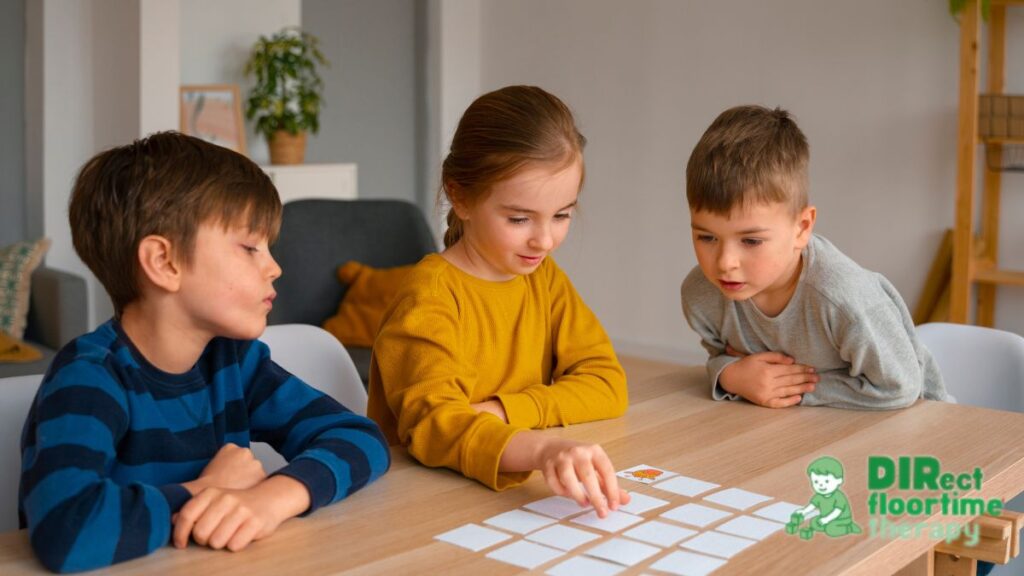
Building focus doesn’t have to be hard. These five cool games for kids to improve focus and concentration mix learning with play. Using DIRect Floortime, children get a fun way to practice attention skills. Activities like puzzles, math challenges, language games, or movement exercises serve as both an attention span test game and a concentration topics game, training the brain and helping kids think more clearly.
Playing these activities to help kids focus regularly can help children build habits that support learning, creativity, and problem-solving. Families across New Jersey have noticed real improvements when kids practice focus in small, fun steps.Want to help your child grow their focus while having fun? Reach out to DIRect Floortime to explore activities and strategies designed just for your child. Pick a game, set a small goal, and watch attention, confidence, and curiosity grow every day.