

Key Points:
- Builds natural communication through playful, relationship-based sessions tailored to every child’s needs.
- Strengthens speech, language, and social skills by focusing on emotional connection first.
- Encourages confident self-expression and engagement through child-led, developmentally guided play therapy.
Is there anything more joyful than seeing a child discover how to connect and communicate? For many families, that journey is unique. The Developmental, Individual-differences, Relationship-based (DIR/Floortime) model provides a deeply engaging way to foster organic communication skills. Often paired with professional guidance, it becomes DIR Floortime speech therapy. This approach prioritizes emotional connection first, using playful interactions to spark a child’s natural desire to engage. That desire is the engine of speech development. By focusing on relationships first, DIR Floortime speech therapy helps children build a strong base for social, emotional, and intellectual growth.
Understanding DIR/Floortime
DIR/Floortime is a developmental approach designed to improve communication, interaction, and relational skills, especially for children with developmental challenges. Its focus is on following the child’s lead during play, which strengthens emotional connections. These connections enhance engagement in social situations. At its core, DIR/Floortime prioritizes relationship-building through shared experiences. This creates the ideal environment for natural communication to flourish.
The Principles of DIR/Floortime
The DIR/Floortime model rests on principles that encourage curiosity and communication. Early implementation often leads to better outcomes in speech development.
Assessing Developmental Levels: Therapy begins by understanding a child’s developmental stage. This guides interventions tailored to their cognitive, social, and linguistic abilities. Think of it as tracking speech milestones in a child’s growth.
Celebrating Individual Differences: DIR/Floortime focuses on a child’s unique strengths and interests. These are the key to engagement. Children learn best when they are genuinely curious about what they are doing.
Building Relationships: Establishing trust and comfort between the child and adult creates a safe space. This allows the child to explore speech and interaction naturally.
Child-Led Activities: Adults follow the child’s lead, joining in activities that spark interest. This boosts motivation to communicate and enhances speech development.
W-A-A Concept: Combines Words, Actions, and Affect to create meaningful interactions. This approach enhances emotional communication and fosters authentic self-expression in children.
Pretend Play: Engaging in scenarios like acting out a store helps children practice social interactions while boosting both expressive and receptive language skills.
These principles create a nurturing, stimulating environment that supports speech growth and helps children feel valued.
How DIR/Floortime Supports Communication Development

DIR/Floortime goes beyond speech. It strengthens social-emotional bonds, enhances communication, and equips adults to support their children. These benefits make it a powerful tool in holistic child development.
Enhancing Communication Skills
DIR/Floortime has changed how children develop communication skills. By following the child’s interests and focusing on relationships, it encourages authentic communication within a safe, engaging environment.
Follow the Child’s Lead: Children guide play and learning. This sparks curiosity and encourages them to communicate naturally.
Building Relationships: Strong bonds between child and adult improve practical communication.
Promoting Social-Emotional Skills: Communication depends on emotional understanding. DIR/Floortime supports these abilities through interactive play.
Improved Speech Development: Research shows DIR/Floortime can significantly enhance speech skills. In a study using a single-subject research design, a DIR/Floortime intervention for a child with Autism Spectrum Disorder (ASD) improved communication skill scores by 215% from baseline to the end of the second phase (Dwidjantoro & Sukinah, 2025).
By nurturing relationships and following the child’s lead, DIR/Floortime helps develop social-emotional skills while boosting speech growth.
Strengthening Social-Emotional Bonds
DIR/Floortime strengthens social-emotional bonds between children and their interaction partners. Emotional connection is central to learning.
Improved Interaction Quality: Research shows that active adult involvement during Floortime sessions increases children’s emotional functioning, communication, and daily living skills. The Play and Language for Autistic Youngsters (PLAY) Project reported significant improvements in functional development. All participating parents expressed satisfaction with the program (Greenspan, Wieder, & Simons, 2011).
By focusing on meaningful interactions and celebrating milestones, DIR/Floortime enriches both communication and emotional connections.
Empowering Adults’ Role
DIR/Floortime helps adults support speech development more effectively. By participating actively, adults gain skills to foster meaningful communication.
Strengthening Skills: Adults learn to respond to communicative cues, supporting language growth.
Interpersonal Strategies: Therapy equips adults to stimulate speech during daily routines.
Positive Relationships: Following the child’s lead creates a nurturing space for communication to thrive.
DIR/Floortime transforms adults into confident partners in their child’s development.
Developmental Milestones in DIR/Floortime
DIR/Floortime identifies six core milestones. These milestones guide children toward stronger communication and connection.
| Milestone Number | Name of Milestone | Key Focus |
| 1 | Self-Regulation or Interest in the World | Emotional control and curiosity |
| 2 | Engagement and Relating | Social connections and interactions |
| 3 | Two-Way Intentional Communication | Effective gestures and speech |
| 4 | Communicating with a Purpose to Solve Complex Problems | Sequenced communication |
| 5 | Coming Up with and Developing Concepts | Pretend play and creativity |
| 6 | Creating Links Between Concepts | Linking concepts and logical thinking |
Implementing Floortime Strategies
DIR/Floortime sessions should last about 20 minutes, six to ten times daily (Greenspan, Wieder, & Simons, 2011). Sessions should be child-directed and held in familiar spaces.
Build an Engaging Play Area: A distraction-free zone with sensory materials, playdough, bubbles, textured toys, boosts speech development. These tools engage multiple senses, aiding language growth.
Encourage Child-Led Play: Paying attention to cues, interests, and emotions creates immersive experiences. Children feel heard and motivated to communicate.
Manage Mess During Play: Messy play supports creativity and sensory learning. Designating a specific play space and using mats or drop cloths can keep mess under control without limiting exploration.
Evaluating Progress and Seeking Guidance
Tracking progress in DIR/Floortime is multi-layered. Tools like the Functional Emotional Assessment Scale (FEAS) measure emotional and relational development. The Developmental Profile 3 (DP-3) provides a comprehensive view of developmental strengths.
Speech growth is assessed through milestones and language evaluations. Regular check-ins with therapists ensure ongoing progress. Data from these reports enrich evaluation and guide interventions.
Seeking Professional Guidance
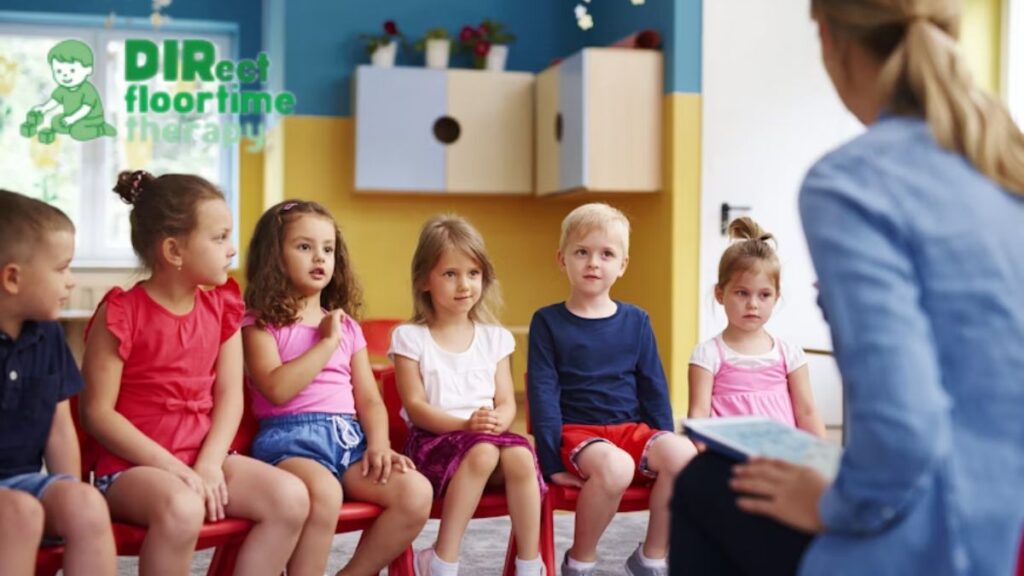
Expert support ensures therapy matches a child’s developmental needs. Guidance helps adults maximize their role in speech development.
Personalized Therapy: Techniques are tailored to the child, enhancing results.
Resource Connections: Professionals link families to speech or occupational therapists for extra support.
Family Support: Guidance empowers families to create joyful, natural learning environments.
Success Stories
Stories of DIRFloortime therapy show profound impacts on speech development. A child with limited expressive language may, after consistent sessions, begin using multi-word phrases, ask questions, and engage in pretend play with peers. Anecdotal evidence, combined with research, confirms that child-led interactions are crucial in transforming communication abilities.
Frequently Asked Questions (FAQ)
What does “Floortime” look like in practice?
It looks like play but is strategic. Adults join the child’s world, literally on the floor, and follow their lead. The goal is to create “communication circles.” The child makes a gesture, sound, or action. The adult responds. This back-and-forth builds complex communication, not just imitation.
How is DIR/Floortime different from other play-based therapies?
Other methods may focus on isolated skills. DIR/Floortime prioritizes emotional connection and functional development. It teaches why a child communicates and how they relate to the world, not just what they say or do.
How quickly will I see changes in my child?
Progress varies. Some families notice engagement and eye contact quickly. These are early signs of communication growth. Purposeful conversation takes longer, as it requires moving through multiple developmental milestones. Small steps like shared attention and smiles build the foundation for bigger changes.
Can Floortime help a non-verbal child?
Yes! DIR/Floortime values non-verbal communication, gestures, facial expressions, sounds, and body language. Strengthening these early forms prepares the child for spoken language when they are ready.
Does my child need a diagnosis to benefit?
Not at all. While often used for children with Autism Spectrum Disorder, DIR/Floortime works for any child struggling with social-emotional engagement, communication, or emotional regulation. It adapts to each child’s individual profile.
Helping Your Child Thrive Through Play and Connection

DIR/Floortime Speech Therapy uses a relationship-based approach to help children develop natural communication. With DIRect Floortime, child-led play and emotional connection guide developmental milestones.
This approach helps kids strengthen expressive and receptive language while forming social-emotional bonds. Research suggests consistent improvements in communication, problem-solving, and relational skills (Greenspan & Wieder, 2006; Dwidjantoro & Sukinah, 2025). Techniques like pretend play, play routines, and the W-A-A model give children meaningful ways to express themselves. When applied in familiar settings with careful milestone tracking, DIRect Floortime keeps learning engaging, effective, and developmentally right. Families in New Jersey and beyond report that children communicate more confidently, explore their world, and reach new milestones. Curious how this method can help your child? Contact us today to learn personalized strategies that turn everyday play into real communication growth.