Key Points:
- Sensory bins inspire curiosity, building fine motor skills through playful, hands-on exploration.
- Engaging textures, tools, and themes support language growth, creativity, and emotional regulation.
- Simple containers become learning adventures, strengthening problem-solving, cooperation, and independence.
Ever wonder how to make learning feel like an adventure instead of a chore? The secret is play, hands-on, fun, and engaging play. One great way to do this is with a sensory bin.
So, what are sensory bins? They’re usually a simple container, like a plastic tub, filled with items that spark a child’s senses. Every touch, scoop, and pour becomes a chance to explore and learn.
Sensory bins encourage curiosity naturally. Children experiment, discover, and problem-solve while having fun. According to the American Academy of Pediatrics, play plays a key role in building the brain, social skills, language, and early math understanding.
Curious to see how this playful approach can boost your child’s learning? Let’s explore the world of sensory bins.
The Core Concept: Benefits of Sensory Bins for Toddlers
Sensory bins aren’t just a fun distraction. They are a purposeful activity supporting a child’s fundamental growth across several domains. The simple act of playing with different materials builds crucial neural pathways. Sensory play has been shown to significantly boost pre-literacy skills in preschoolers.
Fine Motor Skills and Coordination
Children are constantly strengthening the small muscles in their hands. When they play with a kids sensory bin, they use tools like scoops, tweezers, and funnels. This action of grasping, pouring, and manipulating small objects is the perfect practice for:
- Pencil grip and eventually writing.
- Self-feeding with utensils.
- Dressing skills, such as zipping and buttoning.
These precise movements, the fine motor skills, are the foundation for a lifetime of independence.
Cognitive Development and Problem-Solving
Does sorting red pom-poms from blue beads sound like math? It is! As kids explore their sensory bins, they are actively engaging in essential cognitive tasks.
- Classification: Children learn to identify, sort, and group items based on color, size, and shape. This is early logic.
- Volume and Measurement: Using cups to fill and empty the bin teaches concepts like “full” and “empty,” “more” and “less.” A study in the Journal of Science Education and Technology by Ramani and Siegler noted that play involving number and spatial concepts is critical for mathematical reasoning.
- Imaginative Play: A bin of dried beans might become a construction site for one child. It might be a soup kitchen for another. This open-ended play fuels creativity and abstract thinking.
Language and Vocabulary Expansion
Sensory play offers a rich context for language development. As children feel the texture of dry rice or water beads, they have opportunities to learn new descriptive words. Imagine a child sinking their hands into shredded paper:
- They feel a specific sensation.
- An adult might say, “That paper is crinkly and soft.”
- The child connects the word to the tactile experience.
This multisensory approach aids in vocabulary retention. How else can you practice words like smooth, rough, squishy, heavy, or light in such a natural, engaging way?
Integrating Learning: What Do Sensory Bins Help With?
The beauty of a sensory bin is its adaptability. You can easily tailor the contents to reinforce specific educational themes. This integration supports a truly holistic learning experience.
| Skill Development | Sensory Bin Activity Example | Key Learning Outcome |
| Literacy | Hiding plastic letters in cornmeal or sand. | Letter recognition and phonics practice. |
| Math | Using dried pasta to count and make patterns. | One-to-one correspondence and sequencing. |
| Science | Exploring floating and sinking objects in a water bin. | Basic physics, observation, and prediction. |
| Social-Emotional | Two children sharing scoops and toys in one bin. | Turn-taking, cooperation, and communication. |
Social-Emotional Growth
While often seen as a solo activity, a sensory bin is excellent for fostering social skills. When children play side-by-side, they must practice sharing tools and negotiating space. These interactions teach valuable lessons in teamwork and patience. Furthermore, many children find the repetitive motions of scooping and pouring to be incredibly calming. This focus can help with self-regulation, providing a healthy outlet for energy or overstimulation.
Sensory Bag Ideas for Babies
For the youngest learners, those not quite ready for small choking hazards, sensory bag ideas for babies offer a safe alternative. These are simple zip-top bags filled with materials and sealed with duct tape for protection. They provide a wonderful mess-free way to explore texture and sight.
- Gel Fun: Fill a bag with clear hair gel and glitter. Let the baby squish and poke it.
- Paint Squish: Add a few drops of non-toxic paint inside and seal it. They can “finger paint” without any mess.
- Water Wonders: Use colored water and small floating objects, like foam shapes, inside a sealed bag.
Sensory Bin Ideas
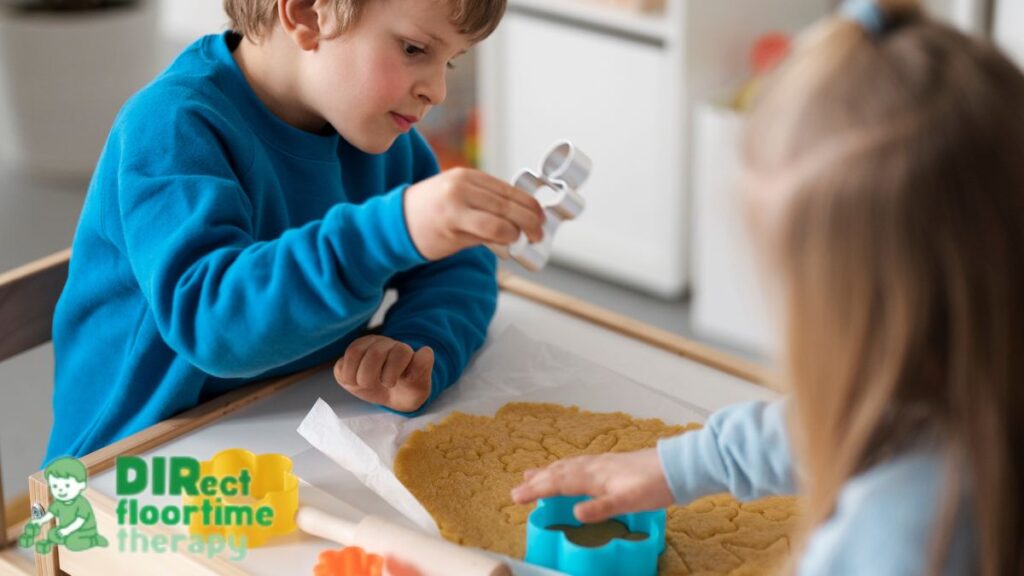
Here are some creative sensory bin themes for toddlers and preschoolers:
- Dinosaur Bin: Sand, rocks, toy dinosaurs, and scoopers for imaginative play.
- Ocean Bin: Blue rice, shells, water beads, and small plastic sea creatures.
- Garden Bin: Soil, plastic flowers, miniature gardening tools, and small animals.
- Shaving Cream Bin: Colorful pool noodle slices mixed with shaving cream for squishy textures.
- Construction Bin: Black beans as “roads,” toy cars, straws, and pom-poms as traffic lights.
Each sensory bin provides opportunities to explore textures, colors, numbers, and more.
How to Make Sensory Bins
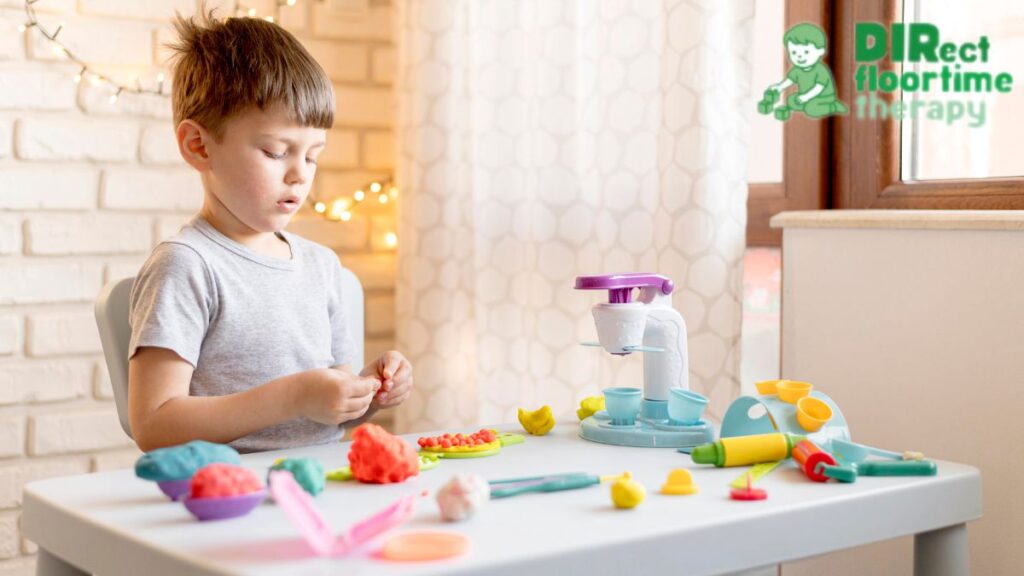
Creating a sensory bin is straightforward and flexible. Here’s a step-by-step guide:
- Select your container: Choose based on the number of children and type of materials.
- Pick a theme: Themes can be seasonal, animal-based, or related to current lessons.
- Add filler materials: Dry rice, beans, water beads, sand, or cloud dough are popular.
- Include tools and props: Scoops, tongs, small toys, or natural objects like leaves and stones enhance play.
- Introduce learning elements: Letters, numbers, or color-coded items turn play into educational exploration.
Sensory bins with thematic elements can increase engagement and enhance learning outcomes.
Setting Boundaries: Sensory Bin Rules
While open-ended play is the goal, some structure is necessary, especially when introducing new materials or playing in a group. Establishing a few simple sensory bin rules beforehand ensures a positive and safe experience.
- Keep Materials in the Bin: The most crucial rule! This helps define the play space. It teaches respect for the materials and minimizes mess.
- Gentle Hands: Remind children to touch and play gently. This protects the materials and other players.
- No Tasting: For young children, it is vital to communicate that items in the bin are for playing, not for eating. Even edible fillers require supervision.
The rule system should be simple and easy to remember, ensuring the focus remains on fun and discovery.
The Joy of the Sensory Bin Container
Creating your own sensory experience is incredibly straightforward. The main thing you need is a reliable sensory bin container. Exploring these activities also offers sensory bin benefits, like boosting creativity, fine motor skills, and curiosity.
- Size Matters: Choose a container that’s large enough for comfortable play, allowing children to move their arms without knocking all the contents onto the floor. A shallow under-bed storage bin often works perfectly.
- Filler: This is the base of the fun! Think about different textures. Try dyed rice, dry beans, oats, water, or sand.
- Tools and Props: Add accessories to enhance the play. Items like measuring spoons, small funnels, cups, toy animals, or building blocks transform the filler into a whole new world.
Remember, the simpler the better. The imagination of the child is what truly powers the learning, not the complexity of the materials. Every element in the sensory bin is an invitation to explore. This hands-on method allows children to construct their own understanding of the world, making learning stick in a powerful way. According to research by H. Goldstein in Child Development, high-quality, unstructured play is a significant predictor of a child’s long-term academic success.
Frequently Asked Questions (FAQ)
How often should I change the sensory bin’s contents?
There isn’t a set rule. Change the bin whenever your child seems bored or loses interest. You can refresh it by swapping tools, adding a new color of rice, or introducing a new theme, like dinosaurs or ocean life. Small updates keep the bin exciting and engaging.
Can I use food items as fillers? Are there alternatives?
Many educators use dried rice or pasta because they are inexpensive and have fun textures. If you prefer not to use food, try sand, water beads, shredded paper, cotton balls, wood shavings, or small pebbles. These alternatives offer a safe and engaging sensory experience.
How can I make a sensory bin experience less messy?
A little mess is part of the fun, but it can be managed. Place a blanket, tablecloth, or shower curtain under the bin. Outdoor play works well too. Another tip is to put the bin on a towel-lined baking sheet; the sides help catch loose materials.
My child seems hesitant to touch the filler. What should I do?
This is completely normal, especially with new textures. Never force your child. Play alongside them and show how fun scooping or pouring can be. You can offer spoons, cups, or tongs so they can explore without touching the materials directly.
Why are feelings sensory bins important for emotional literacy?
A feelings sensory bin uses objects like pom-poms or small figurines to represent emotions. For instance, a child might bury a “happy” figure in sand when talking about a good memory. This type of play helps children recognize, label, and process emotions safely, boosting emotional vocabulary.
Unlocking Learning Through Play
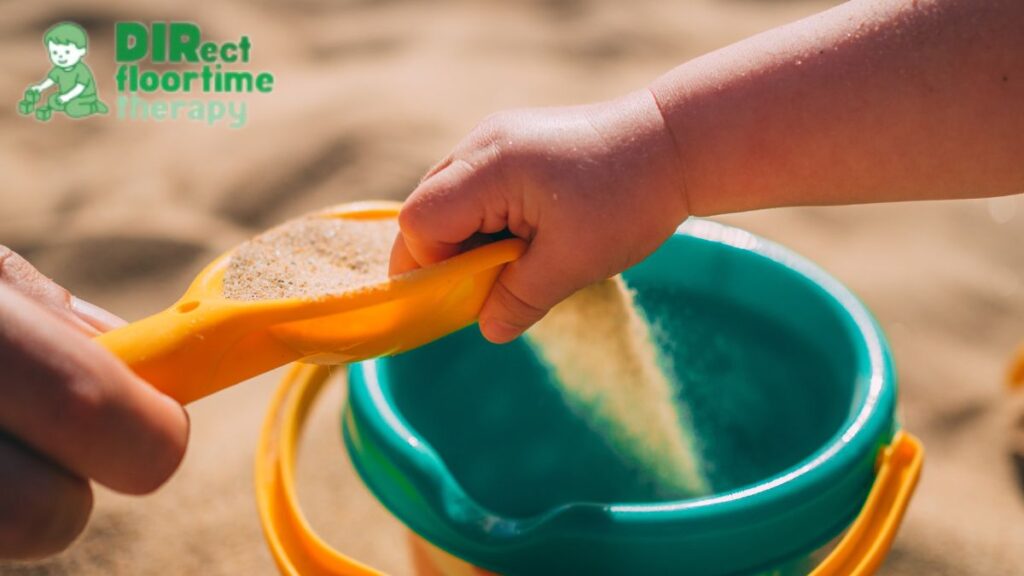
Sensory bins are a fun, hands-on way for kids to learn through play. Using DIRect Floortime, children can explore textures, shapes, and colors while building cognitive and motor skills. From toddlers to preschoolers, this approach stimulates multiple senses, supports language and social development, and encourages problem-solving and creativity.
With a little imagination, almost any safe household material can become part of a sensory adventure. DIRect Floortime makes it easy to create a play-based learning space that’s safe, educational, and engaging. Families in New Jersey and beyond can see real benefits when children are given the freedom to explore and discover.Ready to turn everyday play into meaningful learning moments? Reach out to us today to learn more about how sensory bins and DIRect Floortime can support your child’s development while making learning joyful.