
Key Points

• Parent involvement is essential for communication, emotional, and social development • Everyday routines offer powerful opportunities for connection and learning
• Consistent, relationship-based interactions at home build confidence and long-term growth
Parents are a child’s first and most influential teachers. While therapy sessions provide guidance and professional support, the moments between sessions, playtime, daily routines, and shared experiences are where development truly unfolds.
Many parents wonder how to “do therapy right” at home. The good news is that DIR/Floortime does not require special equipment, rigid schedules, or long structured sessions. Instead, it
empowers parents to support development through simple, intentional interactions rooted in connection and play.
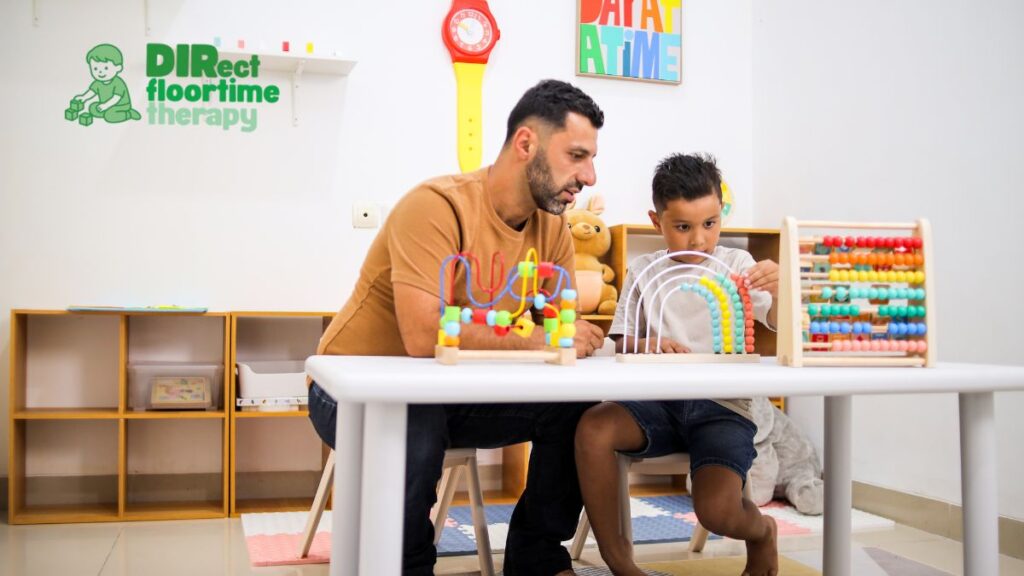
By following a child’s lead and responding to their emotional cues, parents can turn everyday moments; stacking blocks, getting dressed, or sharing a snack into meaningful opportunities for communication, confidence, and learning.
Research published by the American Academy of Pediatrics emphasizes that responsive, relationship-based interactions within daily routines play a critical role in early brain development, emotional regulation, and language growth. DIR/Floortime builds on this evidence by placing parents at the center of a child’s developmental journey.
Why Parent Involvement Matters in DIR/Floortime
Children develop best when learning and emotional support are consistent across environments. When parents actively participate, progress made during therapy sessions is reinforced and expanded at home.
Parent involvement helps to:
• Build emotional security and trust
• Strengthen communication and engagement
• Reinforce therapy goals naturally
• Support regulation during real-life challenges
DIR/Floortime views parents as partners, not observers. Your presence, responsiveness, and emotional availability are powerful tools for growth.
Research in the Journal of Autism and Developmental Disorders shows that responsive, relationship-based play interactions support improvements in social engagement, emotional regulation, and communication in children with autism when caregivers follow the child’s lead during play.
Everyday Opportunities for DIR/Floortime at Home
DIR/Floortime moments happen naturally throughout the day. Everyday routines already provide the structure children need all that’s required is intentional connection.
Daily Routines and DIR Opportunities
| Routine | DIR Opportunity | Developmental Focus |
| Playtime | Shared attention and turn-taking | Communication and engagement |
| Mealtime | Emotional connection and choice | Regulation and autonomy |
| Dressing | Problem-solving and cooperation | Flexibility and confidence |
| Bedtime | Calming routines and bonding | Emotional regulation |
These moments do not need to be long. Even short, meaningful interactions can support development.
Simple DIR Strategies Parents Can Use at Home
DIR/Floortime focuses on how parents interact, not how much time they spend. Key Strategies
• Follow your child’s interests rather than directing play
• Create back-and-forth interactions using gestures, sounds, or movement • Use facial expressions, tone of voice, and pauses to invite engagement
Practical Example
If a child enjoys stacking blocks repeatedly, a parent can:
• Sit nearby and stack blocks in the same way
• Pause and wait for the child to notice
• Knock down the tower playfully and react with excitement
• Wait for the child’s response before continuing
This shared interaction builds communication, emotional connection, and flexibility — without pressure.
Supporting Communication Through Everyday Objects
Children communicate long before they use words. Parents can support communication by responding to actions and interests during play.
Common household objects that support DIR interactions include:
• Blocks, toy cars, dolls, and puzzles
• Balls for rolling or tossing
• Kitchen utensils during pretend play
• Clothing items during dressing routines
When a child reaches, points, vocalizes, or repeats an action, responding with interest helps turn that moment into communication.
Building Confidence Through Consistency
Children thrive when interactions feel predictable and safe. Small, repeated moments of connection help children:
• Feel understood
• Build trust with caregivers
• Develop confidence in trying new skills
Progress is built through consistency, not perfection. Missing a moment or feeling unsure does not undo progress. What matters most is staying emotionally available.
Supporting Common Challenges at Home
Parents may experience challenges such as:
• Limited time
• Uncertainty about “doing it right”
• Emotional fatigue
• A child avoiding interaction
DIR/Floortime emphasizes connection over correctness. Being present and responsive matters more than following a script.
Common Challenges and DIR Responses
Challenge Observable Behavior DIR Response
| Challenge | Observable Behavior | DIR Response |
| Limited time | Short play tolerance | Use brief but focused interactions |
| Child avoids interaction | Turns away or ignores | Stay nearby without pressure |
| Parent uncertainty | Hesitation to engage | Follow the child’s lead |
| Emotional fatigue | Reduced patience | Prioritize calm, low-demand play |
Measuring Progress at Home
Progress in DIR/Floortime is measured by changes in engagement and emotional connection rather than speed of skill acquisition.
Signs of Progress May Include:
| Area | Example Progress |
| Engagement | Child initiates interaction |
| Communication | Uses gestures or sounds |
| Regulation | Handles frustration better |
| Confidence | Tries new activities |
Tracking these changes helps parents recognize growth that might otherwise be overlooked. .
Frequently Asked Questions
1. Do parents need formal training to use DIR/Floortime at home?
Guidance is helpful, but connection and responsiveness are most important.
2. What if my child resists interaction?
Start small and follow your child’s comfort level. Presence without pressure builds trust.
3. How much time should DIR activities take?
Even a few minutes at a time, spread throughout the day, can be impactful.
4. Can siblings participate?
Yes. Sibling play can support social growth and shared engagement.
5. What if I feel unsure or inconsistent?
Progress comes from consistency over time, not perfection.
Supporting Your Child Every Day Through Connection
DIR/Floortime empowers parents to support development through everyday moments of connection, play, and emotional engagement. By responding to your child’s interests and emotions, you create a foundation for communication, confidence, and growth. At DIRect Floortime, we partner with families to support meaningful development at home and beyond. Families in New Jersey and surrounding areas can see how relationship-based strategies help children grow with confidence and connection. If you’re looking for guidance on supporting your child’s development at home, we’re here to help.