
Meta Description:
Play-based learning is essential for child development. Discover how play supports emotional regulation, communication, and problem-solving—and how DIR/Floortime uses play to foster meaningful growth.
Key Takeaways
- Play is the primary way young children explore, regulate, and understand the world.
- Through play, children develop emotional connection, communication, and problem-solving skills.
- DIR/Floortime uses play as the foundation for relationship-based, meaningful learning.
Why Play-Based Learning Is Essential in Early Childhood
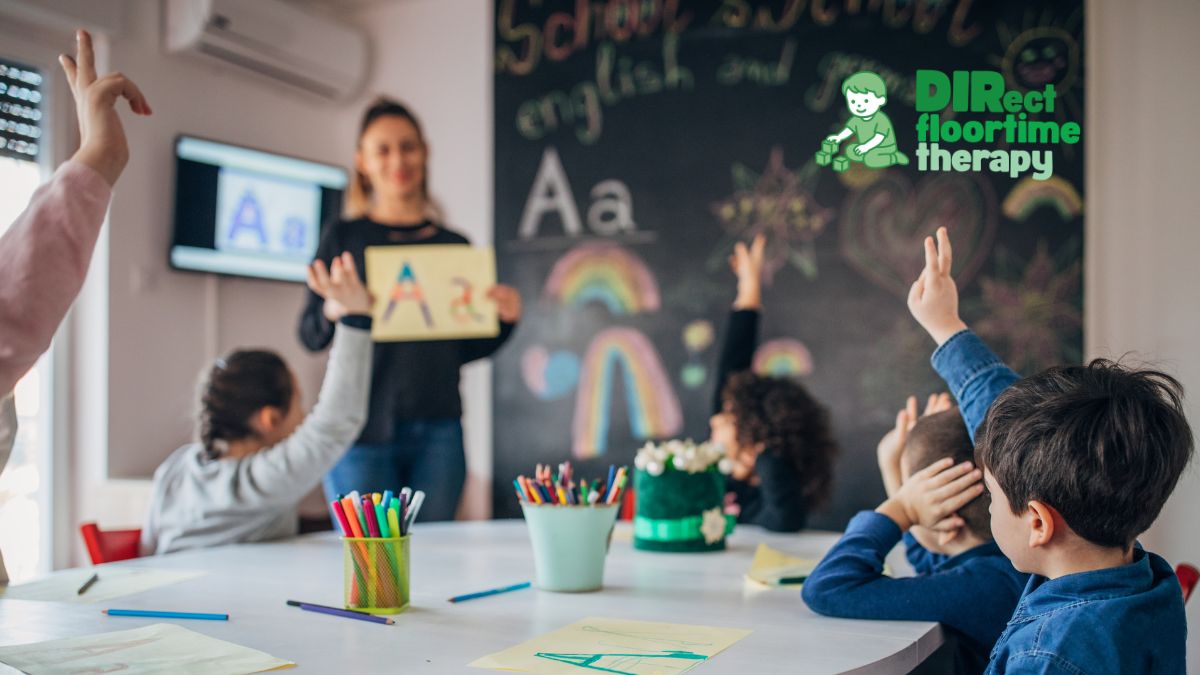
In early childhood education, play is often misunderstood as a break from “real” learning. In reality, play is the most powerful and natural way children learn.
For young children especially those with developmental, sensory, or emotional differences—play-based learning supports growth in ways structured instruction often cannot. Through play, children stay emotionally engaged, and emotional engagement is what makes learning meaningful and lasting.
When adults intentionally join children in play, learning becomes connected, joyful, and developmentally appropriate rather than pressured or performance-based.
Why Play Matters in Early Childhood Development
Play is how children:
- Experiment with new ideas
- Express emotions safely
- Practice social interaction
- Strengthen problem-solving skills
- Build creativity and imagination
Unlike adult-directed instruction, play keeps children internally motivated. This motivation strengthens attention, memory, and emotional resilience—critical foundations for lifelong learning.
Play as the Foundation for Emotional Connection
One of the most overlooked benefits of play is its power to build emotional connection.
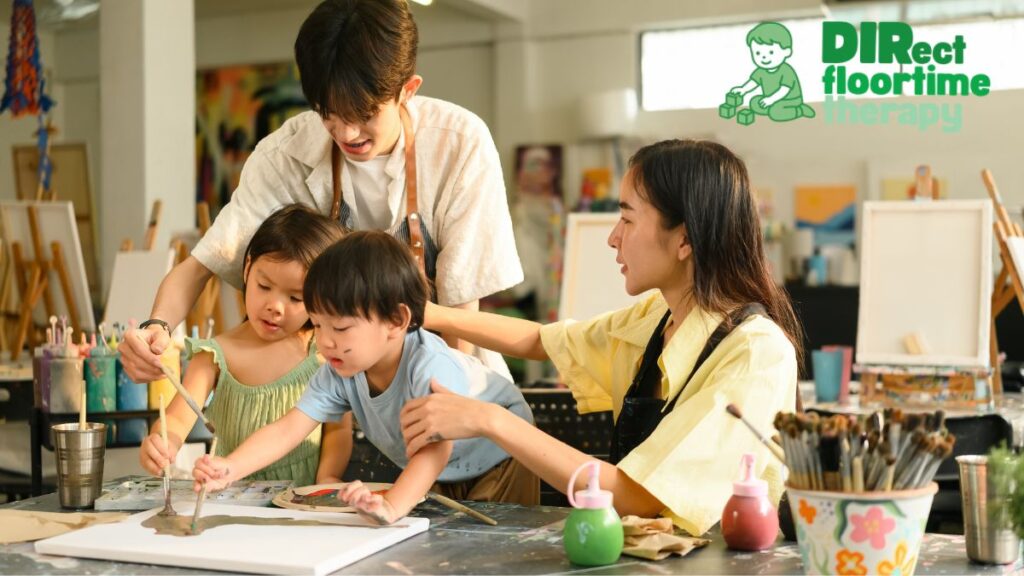
Play creates shared joy—an essential ingredient for healthy development. During playful interaction:
- Children feel seen, heard, and understood
- Relationships become safe spaces for exploration
- Trust deepens
- Engagement increases
In the DIR/Floortime model, emotional connection is the starting point for all learning. Development happens best within warm, responsive relationships.
How Play Supports Emotional Regulation
Children cannot learn effectively when they feel overwhelmed, anxious, or dysregulated. Play supports nervous system regulation by offering:
- Predictable rhythms and routines
- Sensory input tailored to the child’s needs
- A sense of control and safety
- Opportunities for co-regulation with a trusted adult
When children feel regulated and secure, they are naturally more open to communication, social interaction, and cognitive growth.
How Play Builds Communication Skills
Play naturally encourages communication—both verbal and nonverbal.
Children communicate during play through:
- Gestures and body movement
- Facial expressions and eye contact
- Sounds and vocalizations
- Words and imaginative storytelling
DIR/Floortime expands communication by following the child’s intent and creating meaningful back-and-forth exchanges. These playful interactions strengthen language development while preserving joy and connection.
Following the Child’s Lead: The DIR/Floortime Approach
A core principle of DIR/Floortime is child-led play.
When adults follow a child’s lead:
- The child’s interests and strengths are honored
- Motivation and engagement increase
- Resistance and frustration decrease
- Learning feels natural rather than forced
Adults enter the child’s world first—then gently expand the play to support new developmental skills.
This relationship-based approach makes learning feel safe, empowering, and sustainable.
Play-Based Learning vs. Pressure-Based Learning
When learning is driven primarily by pressure:
- Engagement drops
- Stress increases
- Skills may not generalize to real-life situations
- Emotional connection weakens
In contrast, play-based learning supports flexible thinking, resilience, and creativity—especially for children who learn differently.
Play allows children to practice skills in meaningful contexts, making development deeper and more integrated.
What This Means for Parents
Parents do not need elaborate lesson plans or expensive toys to support development.
What matters most is:
- Being emotionally present
- Staying curious about your child’s interests
- Prioritizing connection over outcomes
- Creating moments of shared joy
Even short periods of intentional, playful interaction can strengthen communication, emotional regulation, and problem-solving skills.
Final Thoughts: Play Is the Engine of Learning
Play is not a distraction from development—it is the engine that drives it.
When children are given the space to learn through play, supported by emotionally attuned adults, growth becomes natural, joyful, and lasting.
DIR/Floortime recognizes what research and experience continue to show: play is children’s most powerful pathway to learning.