
Introduction
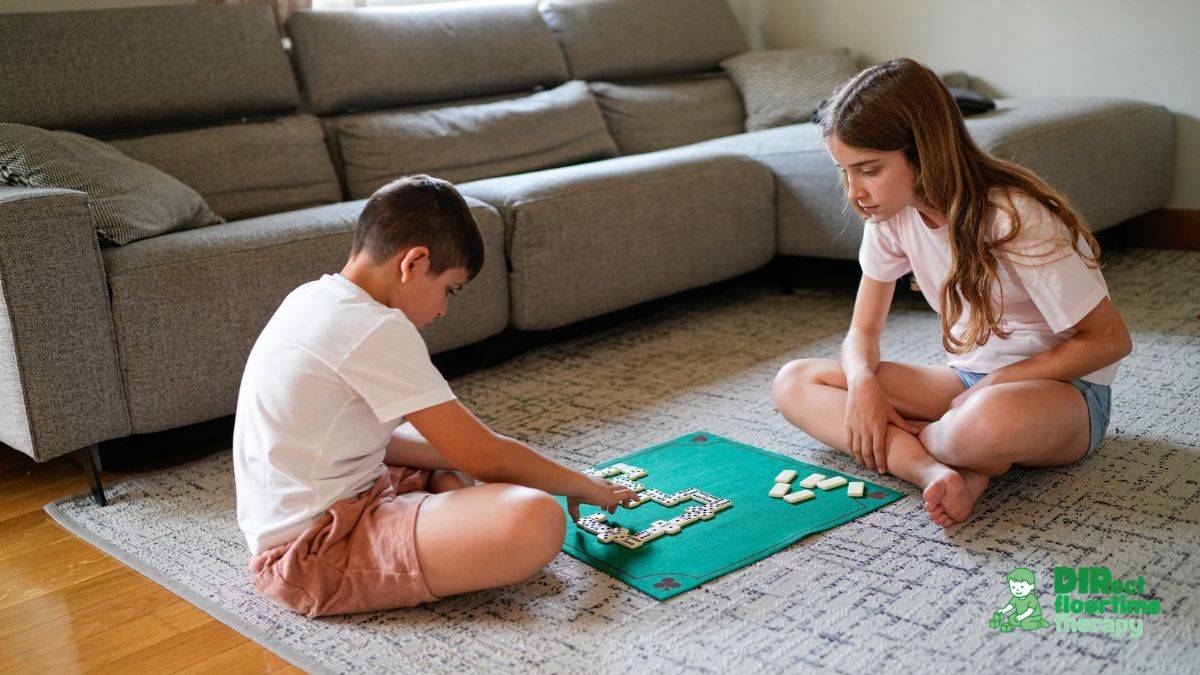
For many families raising an autistic child with other children in New Jersey, one of the quieter worries sits with the siblings. Parents watch their neurotypical child try to engage, get rejected or ignored, and walk away hurt or confused. They watch the autistic child miss bids for connection that would have been obvious to anyone else in the room. And they wonder: will these two ever really know each other?
The answer, in most families, is yes. But it rarely happens on its own. Sibling connection with an autistic child takes intentional support, realistic expectations, and an understanding of why standard social scripts do not always work for autistic kids. The relationship is worth building. Research consistently shows that strong sibling bonds in childhood predict better long-term outcomes for autistic individuals, including social communication growth and emotional regulation (Shivers et al., Autism, 2021).
This guide is for NJ parents who want to support that connection without putting pressure on either child, and without accidentally making the sibling feel like a junior therapist. It is grounded in the DIR/Floortime framework, which starts from the inside out: understanding what each child is emotionally ready for before asking them to do anything together.
Key Takeaways
- Sibling connection with an autistic child is achievable but rarely happens without intentional support.
- The DIR/Floortime principle of following the child’s lead applies directly to sibling relationships.
- Autistic children show affection and connection differently, not less — neurotypical siblings can learn to read these signals.
- Low-pressure, predictable, interest-led activities build more connection than structured social practice.
- Protecting the neurotypical sibling’s individual needs is essential to a healthy long-term sibling bond.
- Professional sibling-focused Floortime sessions are available for families who need more structured support.
Why Sibling Connection Is Different When One Child Is Autistic
Most sibling relationships are built through thousands of small, spontaneous interactions: a shared joke, an argument over the remote, a moment of boredom that becomes a game. These micro-connections accumulate into genuine intimacy.
When one sibling is autistic, many of those spontaneous pathways are blocked or disrupted. The autistic child may struggle to read their sibling’s emotional signals, may not initiate in ways the neurotypical sibling recognizes, and may respond to overtures in ways that feel like rejection even when they are not.
Researcher Ellen Shivers, who studies sibling relationships in autism, notes that neurotypical siblings often describe feeling invisible or second-priority in the family, not because parents love them less, but because managing an autistic child’s needs consumes visible time and energy. These siblings can develop what researchers call “parentification” — taking on a caregiver role too large for a child — or they can withdraw entirely (Shivers, Poehlmann-Tynan, 2017). Neither outcome is inevitable. But it does require adults to create the conditions for real connection rather than simply hoping it emerges.
What DIR/Floortime Tells Us About Connection
The DIR/Floortime model, developed by Dr. Stanley Greenspan, is built around a core observation: meaningful connection does not start with teaching social skills. It starts with following the child’s lead, entering their world, and building emotional engagement before asking for anything.
In formal Floortime sessions, a therapist or parent gets on the floor with the child and joins whatever the child is doing, adding just enough novelty to spark back-and-forth. The goal is not to get the child to perform a social behavior. The goal is to help the child experience the pleasure of connection itself.
This same principle applies to sibling relationships. The neurotypical sibling does not need to become a therapist. But the approach works better when siblings learn to enter the autistic child’s world rather than trying to pull the autistic child into theirs. That means noticing what the autistic child is interested in, engaging with that interest genuinely, and not pushing past the point of comfortable engagement.
The Floortime Principle Applied to Siblings
- Follow their lead: join what your autistic sibling is already doing before introducing something new.
- Stay in the moment: short, positive interactions build more than long forced ones.
- Look for the “wow” reaction: when you do something that gets a real reaction, do it again.
- Expect asymmetry: your autistic sibling may connect differently, not less.
How Autistic Children Actually Show Connection
One of the most important things a neurotypical sibling can learn is that their autistic brother or sister may show affection and connection in ways that look different from what they expect.
An autistic child who seems uninterested in a sibling may actually be highly aware of them. They may show connection through parallel play, through sharing a special interest, through protecting a sibling from something that upset them, or through ritualistic behaviors that only include the sibling (like always handing them the first piece of something).
Researcher Ilene Schwartz at the University of Washington has noted that autistic children often show social interest in ways that are low-bandwidth from the outside but highly meaningful from the inside. A sibling who learns to read these signals often reports feeling much more connected than one who is waiting for more conventional displays of affection (Schwartz, Kennedy, 2004). Parents can help by narrating what they observe: “Did you notice that your brother always saves you the purple one?” or “She stopped what she was doing to watch you on the swing.”
Activities That Build Real Connection
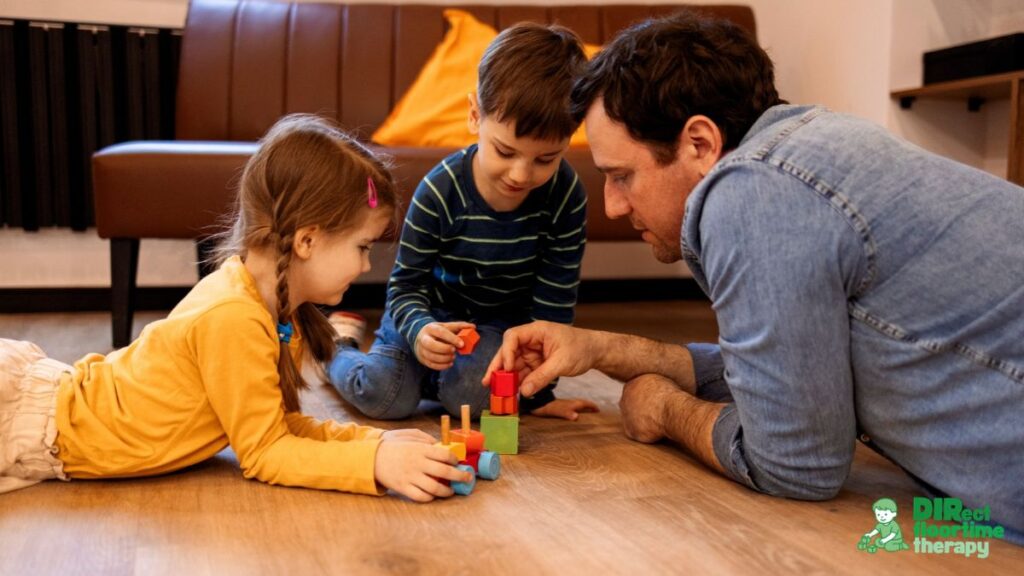
Not all activities are equally good for building sibling connection when one child is autistic. The most effective ones are low-pressure, sensory-comfortable, predictable in structure, and rooted in what the autistic child already enjoys.
| Activity | Why It Works | Parent Tip |
| Parallel Play With a Shared Theme | Allows proximity and shared focus without requiring direct back-and-forth interaction. The autistic child can engage on their own terms while the sibling is present. | Choose an interest the autistic child already has. Both children do their own version of the same activity side by side: both build, both draw, both sort. |
| Simple Repetitive Games | Predictability reduces anxiety. When the autistic child knows exactly what comes next, they are more likely to stay engaged and show positive affect. | Think: rolling a ball back and forth, stacking and knocking over, peekaboo variations. The sibling’s job is to do the same thing consistently and wait for the response. |
| Shared Special Interest Time | The autistic child is in their area of expertise and competence, which shifts the relational dynamic in a positive direction. | Ask the neurotypical sibling to genuinely learn about the special interest. Authenticity matters. The autistic child will notice if the sibling is faking engagement. |
| Movement-Based Play | Many autistic children regulate better during movement. Trampolines, swing sets, obstacle courses, and dancing often lower anxiety and increase social availability. | Keep it unstructured at first. Movement together is connection even without words. |
| Joint Sensory Activities | Shared sensory experiences like kinetic sand, water play, and playdough can create a calm co-regulation environment with low social demand. | Let the autistic child lead the sensory exploration. The neurotypical sibling mirrors, adds to, or just observes without directing. |
What to Say to the Neurotypical Sibling
Neurotypical siblings need honest, age-appropriate information about autism. They also need space to have their own feelings about their sibling’s behavior without those feelings being shut down or minimized.
Research from the Sibling Support Project, founded by Don Meyer, consistently shows that siblings do better when they have three things: information, community, and time with parents that is not about autism (siblingsupport.org). Parents who talk openly about autism in terms of “how her brain works” rather than “what’s wrong with him” tend to raise siblings who have more empathy and fewer resentment patterns over time.
What to Say at Different Ages
- Ages 3-5: “Your brother’s brain is built differently. Sometimes it’s hard for him to talk, but he loves being near you.”
- Ages 6-9: “Your sister’s brain takes in a lot of information at once. When she gets loud or upset, it’s not about you.”
- Ages 10-12: “Being autistic means some social things that feel easy for you feel really hard for him. He shows he cares in different ways.”
- Teens: Be direct and honest. Invite questions. Discuss what support might look like in adulthood without making it feel like an obligation.
Protecting the Neurotypical Sibling’s Needs
One of the most important things parents can do for sibling connection is to actively protect the neurotypical sibling’s standing in the family. When a neurotypical sibling feels overlooked, resentment toward the autistic sibling is a natural response, even if that resentment feels uncomfortable to name. Researcher Marsha Mailick Seltzer at the University of Wisconsin has found that adult neurotypical siblings who report positive relationships with their autistic brothers or sisters almost universally describe childhood experiences where they felt their own needs mattered (Seltzer et al., Journal of Autism,2009). Being seen as an individual, not just the sibling of an autistic child, makes a lasting difference.
Protecting the Neurotypical Sibling
| Status | Action Item for Parents |
| ☐ | Schedule one-on-one time with the neurotypical child each week, with no autism-related conversation |
| ☐ | Let the neurotypical child have spaces in the home that are entirely their own |
| ☐ | Do not expect the neurotypical child to manage, monitor, or accommodate their autistic sibling without acknowledgment |
| ☐ | Allow and validate the neurotypical sibling’s frustration without making them feel guilty for having it |
| ☐ | Give the neurotypical sibling age-appropriate explanations, not excuses, for their autistic sibling’s behavior |
| ☐ | Connect them with Sibshops or similar sibling support groups in NJ, where they can talk to peers in the same situation |
| ☐ | Ask the neurotypical sibling regularly: “How are you doing with all of this?” |
When a Therapist Can Help Sibling Connection Directly
In many cases, parents do most of the work of building sibling connection at home. But there are situations where bringing a therapist into the picture can help significantly.
Signs That a Therapist May Help Sibling Connection
- The neurotypical sibling has developed significant anxiety, withdrawal, or behavioral changes that coincide with the autistic sibling’s challenges.
- Sibling interactions consistently end in distress for one or both children.
- The neurotypical sibling is taking on a caregiver role and showing signs of stress or burnout.
- The autistic child has made very little progress in social engagement at home despite parent efforts.
- The family wants structured sibling-focused Floortime sessions with professional guidance.
- A parent is unsure how to narrate or mediate sibling interactions without making things worse.
DIR/Floortime-based therapy at DirectFloortime can include sibling-focused components, where a therapist works directly with both children to build the foundations of connection. These sessions are structured to be positive for the autistic child while also giving the neurotypical sibling a framework that actually works, rather than just telling them to “be patient.”
How DirectFloortime Supports Sibling and Family Connection in NJ
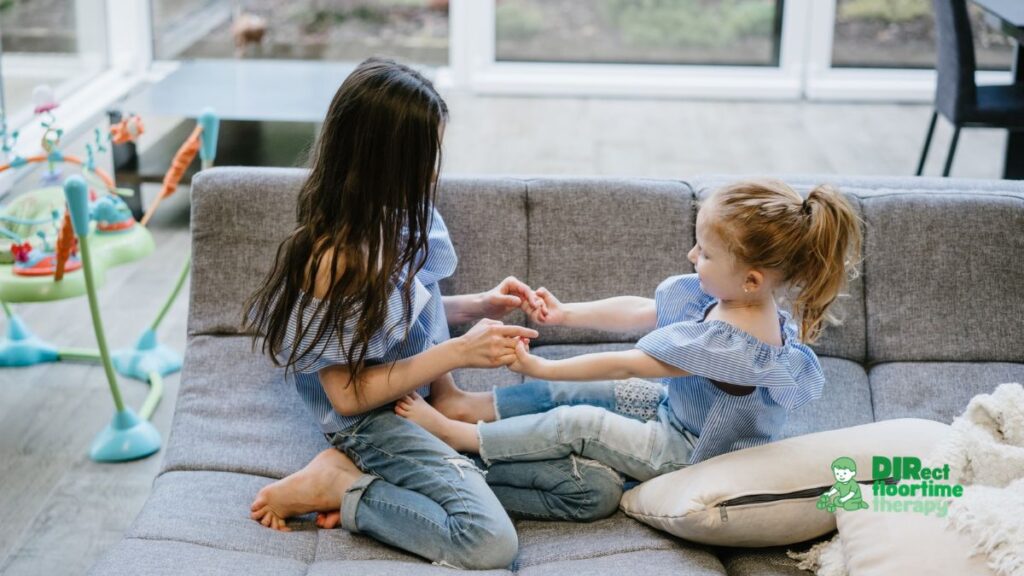
At DirectFloortime, we work with the whole child and the whole family. Building connection between siblings is not a side task in therapy. For many autistic children, the sibling relationship is one of the richest and most motivating social contexts in their lives. When it goes well, it supports the broader goals of emotional development, communication, and self-awareness.
Our DIR/Floortime approach helps NJ families understand what their autistic child is emotionally ready for, how to create the right conditions for connection, and how to support both children in a way that is honest about the challenges and realistic about what is achievable at each stage. Families looking for additional statewide resources and community networks can also explore Autism New Jersey alongside individualized home therapy.
If sibling dynamics are a source of stress in your home, or if you simply want to build on something that is already there, we are here to help.
Ready to Support Your Family’s Connection?
DirectFloortime serves families across New Jersey.
No waitlist. Most insurance accepted.