

Key Points:
- Use DIR play-based strategies to reduce mealtime stress and increase acceptance.
- Gradually expose children to new foods while respecting sensory sensitivities.
- Encourage curiosity, autonomy, and positive interactions during every meal experience.
Mealtimes can feel like a battlefield when your child is a picky eater. For families managing picky eater autism, this challenge can feel even bigger. Children on the autism spectrum often have heightened sensory sensitivities, making certain textures, flavors, or smells overwhelming. The DIR model, Developmental, Individual-differences, Relationship-based, offers a gentle, play-focused approach that turns mealtime into a space for exploration rather than stress. By blending curiosity-driven strategies with simple routines, children can slowly expand their food choices while feeling safe and supported.
Curious how this works in real life? Keep reading to discover evidence-based strategies, playful activities, and step-by-step methods to ease feeding challenges, boost food acceptance, and reduce mealtime anxiety for your child.
Sensory Eating DIR
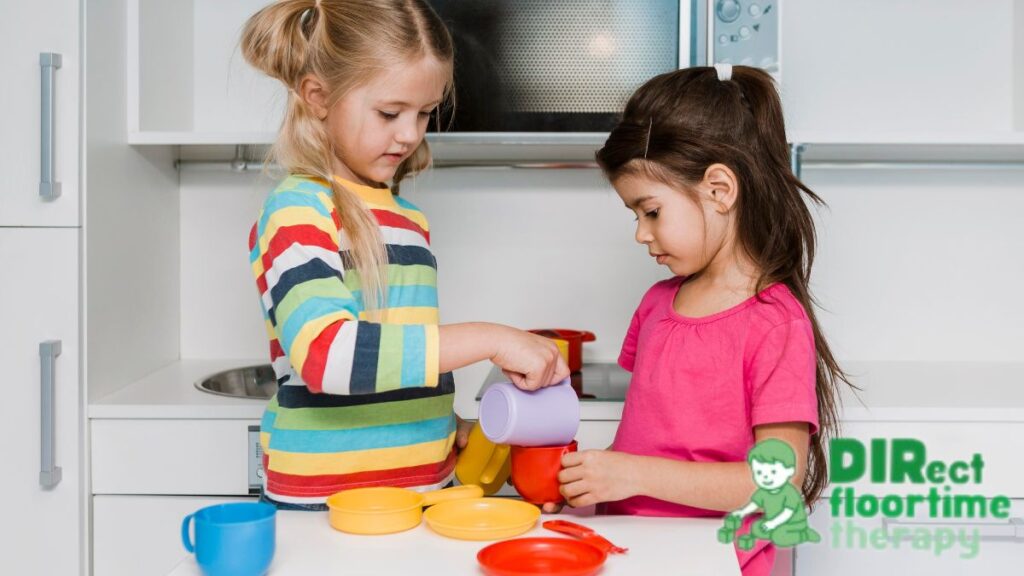
Understanding the sensory world of your child is key. Many children with picky eating behaviors, especially those with autism, have heightened reactions to textures, smells, or temperatures. Research indicates that sensory sensitivities contribute significantly to food refusal (Green et al., 2015). DIR encourages using these sensory insights to guide play-based eating experiences.
Key Strategies
- Observe individual differences: Notice which textures, temperatures, or food colors trigger reactions. Keep a food journal to track patterns.
- Introduce sensory experiences through play: Use toys, playdough, or pretend food to explore textures without the pressure of eating.
- Pair new foods with familiar ones: If your child tolerates soft applesauce, offer a small piece of peeled apple alongside it.
Practical Example
Imagine a 5-year-old who refuses all mushy foods but tolerates crunchy snacks. Using DIR, you might first let the child touch or poke the mushy food during playtime. Over several sessions, gradually incorporate small tastes, always respecting the child’s pace. The goal is exposure, not immediate consumption.
Play-based sensory interventions can help increase food acceptance in children with selective eating over time.
Feeding Challenges
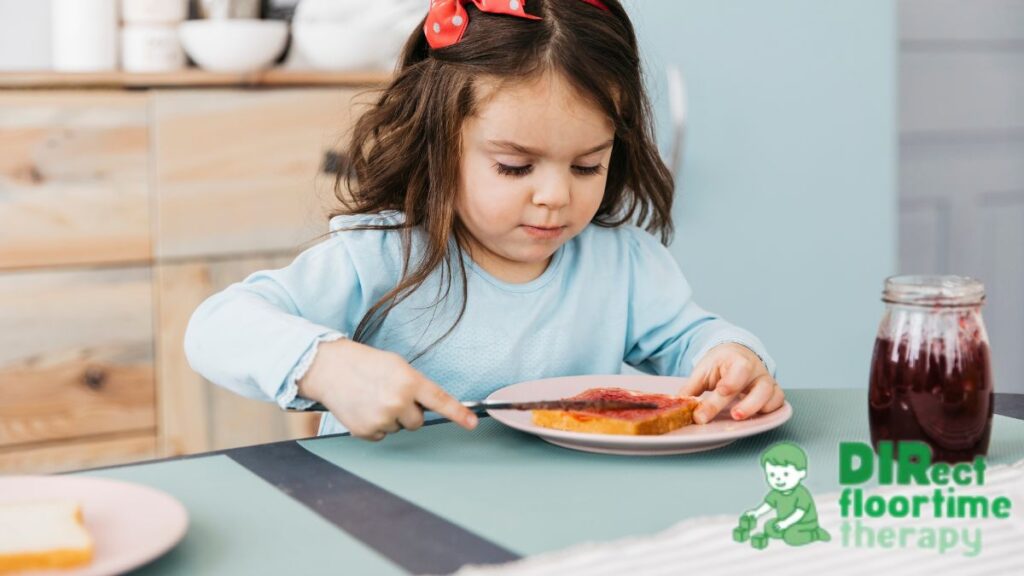
Feeding challenges often arise from a combination of sensory sensitivities, rigid routines, and learned mealtime behaviors. DIR addresses these by focusing on emotional regulation, relationship-based guidance, and developmental readiness.
Steps to Ease Feeding Challenges
- Create predictable mealtime routines: Children feel safer when meals happen at consistent times in a calm environment.
- Offer structured choices: Present two options for side dishes or drinks. Avoid asking yes/no questions that might prompt immediate refusal.
- Serve one new food at a time: Introducing multiple new foods can overwhelm a child, leading to refusal. Start with a single small portion of a new item alongside a familiar favorite.
Hypothetical Example
A child who consistently refuses vegetables may be offered a small cucumber stick beside a favorite cheese cube. Over time, this child may increase tolerance for both quantity and variety. According to Green et al. (2015), gradual exposure paired with positive reinforcement can help improve vegetable intake in early childhood.
Table: Example Meal Structure for Feeding Challenges
| Food Group | Familiar Choice | New Choice | Portion Size |
| Protein | Chicken nuggets | Grilled fish | 1/4 adult portion |
| Carbohydrate | Plain pasta | Brown rice | 1/4 adult portion |
| Vegetable/Fruit | Carrot sticks | Broccoli florets | 1–2 small pieces |
Food Aversion Strategies
When a child demonstrates food aversion, DIR emphasizes gentle exposure rather than force. The goal is to reduce anxiety and build a positive association with mealtime.
Strategies to Overcome Food Aversion
- Normalize interactions without pressure: Let children smell, touch, or play with foods before tasting.
- Describe sensory properties: Use descriptive words like “crunchy,” “soft,” or “juicy” to help children predict experiences.
- Avoid labeling foods as “good” or “bad”: Subjective labels can reinforce resistance; stick to factual descriptions.
- Implement a “no thank you” plate: Allows polite refusal without conflict, encouraging autonomy.
Hypothetical Scenario
A 6-year-old refuses cooked carrots due to texture sensitivity. Instead of pushing bites, parents can:
- Let the child touch and smell carrots during play.
- Compare carrot texture to a familiar crunchy snack.
- Offer a tiny taste when the child is ready.
Over weeks, repeated exposure can convert aversion into acceptance without confrontation.
Play-Based Mealtime Activities
DIR emphasizes play as a bridge to eating. By making food experiences interactive and fun, children engage curiosity over fear.
Activity Ideas
- Food Art: Arrange fruits and vegetables into shapes or characters to spark interest.
- Pretend Cooking: Let children “cook” using play kitchens or safe utensils.
- Texture Exploration Games: Match foods to similar textures in toys or everyday objects.
Benefits of Play Integration
- Encourages tactile exploration and reduces fear of new textures.
- Enhances social learning through shared mealtime experiences.
- Reduces power struggles by shifting focus from “must eat” to “curiosity first.”
Combining DIR with the Division of Responsibilities
Ellyn Satter’s Division of Responsibility complements DIR by clarifying roles during meals:
- Parent’s role: Decide what, when, and where food is offered.
- Child’s role: Decide how much and whether to eat.
This structure reduces conflict, supports autonomy, and respects children’s natural hunger cues. Offering regular meals and snacks at predictable intervals prevents grazing and fosters natural appetite regulation.
Encouraging Gradual Acceptance
Patience is crucial. DIR supports gradual exposure to new foods without pressure:
- Start with sight, smell, or touch.
- Progress to licking, small bites, and eventually full servings.
- Celebrate small steps as wins to reinforce positive behavior.
Hypothetical Example: A child initially refuses peas. Through exposure over several weeks, they may touch, then taste, and finally request peas voluntarily.
Research supports incremental exposure as highly effective: children may require 10–15 exposures before accepting a new food (Green et al., 2015).
Enhancing Mealtime Positivity
Making meals enjoyable fosters engagement and willingness to try new foods. Techniques include:
- Shared family meals: Eating together models behavior and promotes social learning.
Minimal distractions: Limit screens and loud noises to focus attention on food. - Interactive discussions: Describe foods, colors, textures, and smells without pressure to eat.
Over time, children learn to associate meals with fun, social connection, and exploration rather than stress.
Play-Based Sensory Integration for Food Exploration
Occupational therapists often use sensory integration techniques aligned with DIR principles:
- Tactile play: Let children explore squishy, crunchy, or sticky materials.
- Oral-motor activities: Use straws, whistles, or chewable toys to strengthen oral tolerance.
- Gradual food exposure: Start with non-threatening interactions before progressing to tasting.
These strategies reduce sensory-based resistance, promoting food aversion strategies in a safe, enjoyable context.
Measuring Progress
Track improvements to maintain motivation:
- Food journal: Document exposures, textures tolerated, and new foods tried.
- Behavior notes: Record emotional responses and mealtime cooperation.
- Incremental goals: Start with one new food per week or one positive interaction per meal.
Data-driven insights help adjust strategies and celebrate small victories along the way.
FAQs
1. Will my child starve if I stop bribing them with dessert?
Absolutely not. Bribing can backfire. When dessert is a reward for eating vegetables, kids learn that veggies are the “bad stuff” and dessert is the “good stuff.” Children naturally regulate their intake. Trust their body to eat enough and your pediatrician to track growth. You’re shaping healthy habits, not just filling a tummy.
2. My child will only eat white/beige foods. Is this normal?
Yes, it’s common and often linked to sensory eating challenges. Beige foods, like pasta, bread, or chicken nuggets, are predictable in texture, flavor, and color. This predictability calms a sensitive nervous system. Keep offering small colorful foods, such as a red pepper strip or a blueberry. The goal is exposure, not the bite.
3. What if my child eats nothing at dinner? Should I offer a “backup” meal?
Offering a backup meal teaches your child that holding out guarantees a preferred food. Stick to a regular meal schedule. Serve familiar, safe foods at mealtime. Once the meal ends, the kitchen is closed until the next snack or meal. This helps kids notice hunger cues and reduces power struggles.
4. Is “playing with your food” actually a good idea?
Yes! Playing with food can be essential for sensory exploration. Touching, poking, or building a pea tower helps children feel safe. Keep it playful and pressure-free. Try doing it outside of mealtime as a fun activity, like “Kitchen Science.” This separates exploration from eating expectations.
5. My child refuses to even sit at the table. How do I use DIR when we can’t even start?
Start with the relationship, not the chair. Remove pressure if sitting triggers a struggle. Begin with a “mealtime job” nearby, like placing napkins or pouring water. Prep food together in low-pressure ways. Gradually move their job closer to the table until they participate naturally. Eating will follow when stress is low.
Helping Your Child Explore Food with Confidence
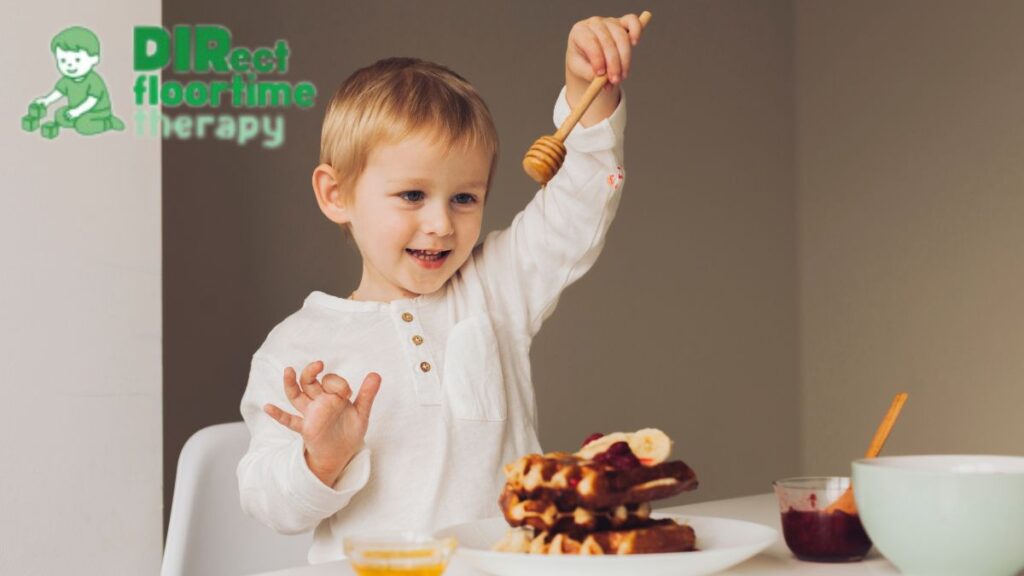
DIR for picky eaters offers a gentle, structured, playful approach to reduce mealtime stress. By focusing on sensory awareness, gradual exposure, and relationship-based guidance, DIRect Floorttime helps children feel safe while trying new foods. Sensory eating DIR strategies paired with thoughtful approaches to feeding challenges and food aversion turn meals into moments of curiosity and social connection. Play-based activities, descriptive language, and low-pressure exposure make exploring food enjoyable for kids and stress-free for caregivers.Families in New Jersey can see how DIRect Floorttime techniques transform mealtimes into chances for growth. Each child develops at their own pace, and these methods respect individuality while building healthy habits. If picky eating is a challenge, reach out to us. We provide practical, relationship-focused guidance to support your child and make mealtimes calmer and more positive for the whole family.

