
Key Points:
- Simple, shared activities help 6-month-old babies develop motor, social, and emotional skills.
- Floor time, sensory play, and music encourage curiosity, coordination, and early learning.
- Short, engaging play sessions strengthen bonds while supporting confidence, communication, and growth.
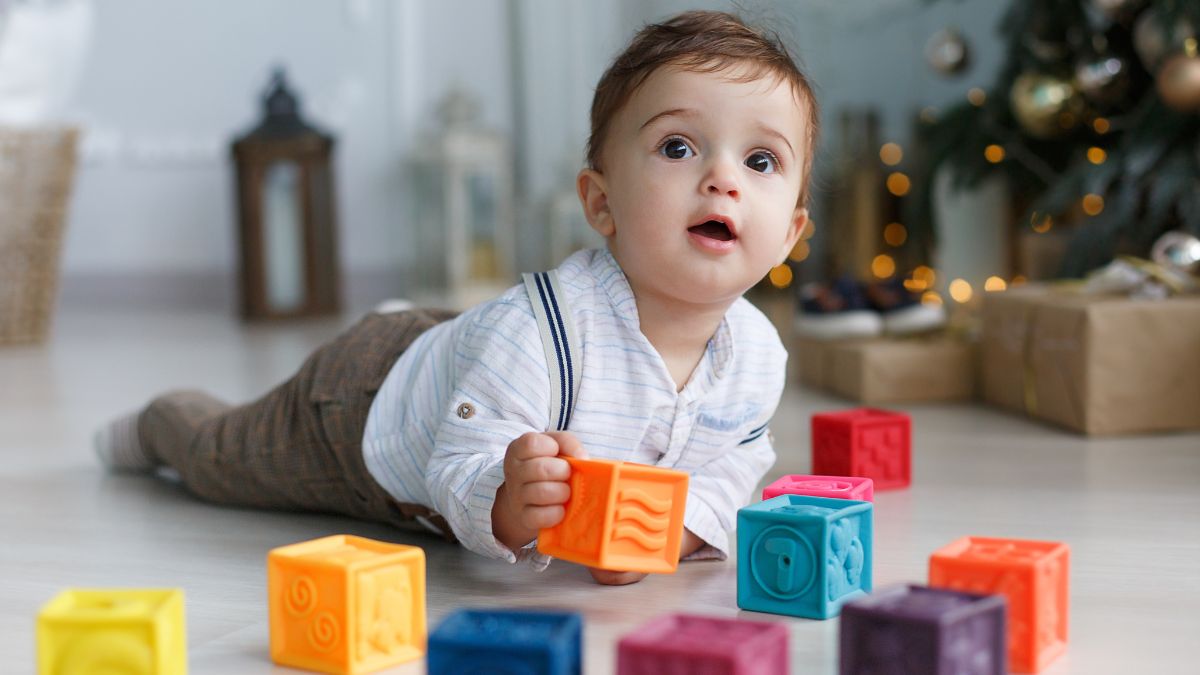
Your 6-month-old is reaching an exciting stage of early development. They’re starting to grab toys, laugh at your expressions, and explore textures with curious hands. This is the perfect time to try fun activities for a 6-month-old baby that spark their senses, build strength, and encourage early learning. Simple play helps your baby grow coordination, communication, and thinking skills while you bond and share laughter.
Play is key to an infant’s growth. It helps them develop motor skills, social awareness, and emotional understanding through everyday exploration. From floor time to sensory adventures, these creative play ideas will keep your little one curious, engaged, and learning with joy.
Floor Time Activities for Infants
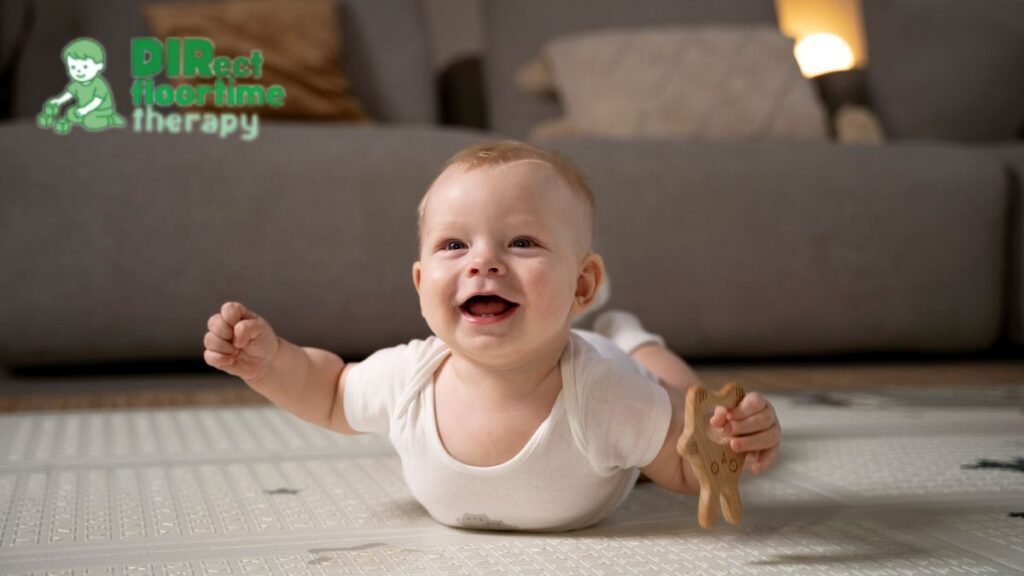
Floor time is more than just play; it’s your baby’s first learning lab. Supervised floor play helps strengthen motor control, coordination, and cognitive awareness.
Here are floor time ideas that encourage exploration and movement:
1. Tummy Time with a Twist
Lay your baby on a soft mat with colorful toys just within reach. Move toys slowly from side to side to encourage head movement and tracking. Studies by Lobo and Galloway (2012) show tummy time boosts motor development and head control.
Try this:
- Use a mirror during tummy time. Babies love watching their reflection; it enhances visual recognition.
- Sing or hum nearby to keep them engaged.
2. Texture Safari
Fill a shallow basket with safe household items, soft cloths, rubber balls, and wooden spoons. Let your baby touch and feel each texture. This sensory activity promotes curiosity and fine motor development.
3. Reaching for the Stars
Hang lightweight ribbons or soft toys from a play gym just above your baby’s reach. Encourage them to stretch their arms and kick their legs. It’s a mini workout that strengthens their core and arms.
Play Activities for 6-Month-Olds
At this age, your baby’s brain is like a sponge, absorbing patterns, sounds, and movements. Playtime stimulates multiple senses at once, creating connections in the brain that support early learning (Johnson et al., 2020).
Here are engaging play activities for 6-month-old babies that make every giggle count:
4. Peekaboo with a Purpose
This classic never gets old. Peekaboo teaches object permanence, the understanding that things still exist even when unseen. Cognitive psychologist Jean Piaget first noted this milestone as a key step in infant brain development.
5. Baby “Dance Party”
Turn on some gentle music and sway your baby in rhythm. Dancing improves balance and body awareness. You’ll both enjoy the movement and laughter.
6. Bubble Chase
Blow bubbles slowly and let your baby watch, reach, or try to pop them. It enhances eye-hand coordination and visual tracking. Keep it short and exciting.
7. Sock Puppets Show
Use simple sock puppets to act out a playful scene. Change your voice for each puppet; it strengthens your baby’s listening and attention span (Moore et al., 2021).
8. Treasure Basket Exploration
Fill a basket with safe objects like silicone spoons, fabric scraps, or smooth wooden rings. Let your baby explore at their own pace. This builds independence while stimulating tactile exploration.
Baby Floor Time
Floor time creates space for babies to move freely, essential for building motor skills. Research by Adolph and Robinson (2015) shows that movement-based play directly supports coordination and sensory integration.
9. Roll & Reach
Encourage rolling by placing a soft toy just out of reach. When your baby tries to roll toward it, celebrate their effort with claps and smiles.
10. Mirror Play
Place a baby-safe mirror beside them. Watch their fascination as they discover facial expressions. It’s a fun way to build early self-awareness.
11. Ball Rolling
Sit across from your baby and gently roll a soft ball toward them. As they reach for or push it back, they learn cause and effect, one of the earliest forms of logical reasoning.
12. Follow the Light
Use a small flashlight to project light patterns on a wall or toy. Move it slowly while saying, “Follow the light!” This builds focus and eye coordination.
6-Month-Old Learning Activities
By six months, babies start connecting sights, sounds, and actions. Introducing interactive play strengthens these connections.
13. Sensory Bag Fun
Seal a clear plastic bag with colorful water beads or gel. Tape it to the floor and let your baby squish and press it. This safe sensory play strengthens finger muscles and curiosity.
14. Musical Toys
Rattles, tambourines, or bells offer sound-based learning. Rhythmic sounds support early language development and help babies start recognizing patterns in speech.
15. Hand-to-Hand Transfers
Hand your baby a soft toy and encourage them to move it from one hand to the other. This builds coordination and focus.
16. Talk Time
Narrate your actions throughout the day. Describe what you’re doing: “We’re folding clothes! This is your shirt.” Talking helps your baby associate sounds with meanings.
17. Discovery Bottles
Fill small bottles with rice, pasta, or beads. Let your baby shake and watch the motion. It’s a mini science lab for developing cause-and-effect thinking.
6-Months-Old Baby Activities to Build Bonds
Every giggle, coo, and gaze is part of your baby’s communication growth. Research by Harvard’s Center on the Developing Child (2020) shows that “serve-and-return” interactions, where adults respond to a baby’s cues, build neural pathways that support learning.
18. Face-to-Face Chats
Sit at eye level and mimic your baby’s sounds. Pause to let them “reply.” This strengthens language pathways.
19. Singing Stories
Turn storytime into songtime. Use expressive tones to hold attention. Music improves memory and auditory processing.
20. Mini Obstacle Course
Use pillows and soft toys to create a baby-safe zone for crawling or rolling. Encourage your baby to explore freely.
21. Finger Rhymes
Songs like “Pat-a-Cake” or “The Itsy Bitsy Spider” teach rhythm and hand coordination. They also boost anticipation skills.
Table: Quick Guide to Engaging Play Ideas
| Activity | Skill Focus | Developmental Benefit |
| Peekaboo | Cognitive | Teaches object permanence |
| Tummy Time | Motor | Builds neck and shoulder strength |
| Texture Safari | Sensory | Enhances tactile exploration |
| Mirror Play | Social | Encourages self-recognition |
| Music Play | Language | Boosts rhythm and listening |
| Ball Rolling | Coordination | Supports visual tracking |
| Treasure Basket | Problem Solving | Inspires curiosity |
| Singing Stories | Emotional | Builds connection and memory |
How to Entertain a 6-Month-Old
Wondering how to keep your baby engaged during the day? It’s simpler than it looks. Short bursts of play with variety make a big difference.
Tips:
- Rotate toys every few days to keep things fresh.
- Alternate between quiet play (reading, singing) and active play (rolling, reaching).
- Keep sessions short; babies this age engage best in 10–15 minute intervals.
These 6-month-old baby activities promote brain development, motor skills, and joy. Remember, your baby learns through repetition, so even the simplest games are valuable.
Encouraging Learning Through Everyday Moments
Play doesn’t always need props. Daily routines can teach just as much as structured play.
- During Bath Time: Splashing helps hand movement and water awareness.
- During Mealtime: Let your baby touch soft foods; it’s sensory exploration at its best.
- During Walks: Point out birds, trees, and sounds. It builds language understanding.
The key is interaction. Every smile or word you exchange shapes your baby’s sense of connection and curiosity.
FAQs: Engaging Play for 6-Month-Olds
1. How long should playtime last for a 6-month-old?
About 10–15 minutes per session works well. Babies have short attention spans. Watch for cues like turning away or fussing to know when they need a break.
2. Can outdoor play benefit my 6-month-old?
Yes! Outdoor sights, sounds, and scents stimulate their senses. Gentle sunlight also helps regulate sleep cycles and supports vitamin D absorption.
3. What’s the best way to make floor time fun?
Combine textures and toys. Rotate them often. Add songs or mirror play to keep your baby curious and engaged.
4. Are digital toys okay for 6-month-olds?
Experts like Christakis et al. (2018) suggest limiting screen-based play. Babies learn best through hands-on interaction and face-to-face communication.
5. How do I encourage my baby to reach or crawl?
Place toys slightly out of reach during floor time. This encourages stretching and rolling. Applaud every small effort; it motivates your baby to keep exploring.
Cherishing Every Playful Discovery
The best activities for 6-month-old babies are simple, playful, and focused on connection. Every giggle, grasp, and babble helps your little one explore the world, especially with DIRect Floortime, where every moment encourages growth and bonding. Games like peekaboo, texture play, or tummy time expand your baby’s experiences while keeping things fun. Keep activities light, engaging, and full of wonder. These small discoveries lay the foundation for tomorrow’s milestones. If you’re in New Jersey and want support tailored to your baby’s needs, reach out to DIRect Floortime. Their approach helps families build connection, encourage communication, and enjoy meaningful play that sparks curiosity and learning.

