

Key Points:
- Playful, relationship-based strategies improve planning, flexibility, and emotional organization every day.
- DIR strengthens executive functioning through child-led interactions, co-regulation, and meaningful engagement.
- Supportive routines with visual steps reduce overwhelm, boosting confidence and independence.
Executive functioning challenges can make everyday tasks feel like a puzzle for many kids. For executive functioning kids, managing schoolwork, routines, and social expectations often causes stress. What if there were ways to ease these challenges while keeping learning playful?
The DIR approach uses developmental, individual difference, and relationship-based strategies to build planning skills autism while supporting emotional organization. It helps children grow flexibility and problem-solving skills through structured, child-led play. Curious how DIR can turn executive function struggles into strengths? Let’s look at practical examples, easy-to-try strategies, and research-backed methods that show how children can gain confidence, enjoy learning, and develop life skills in meaningful ways.
Understanding the Challenge: A Morning Routine Scenario
Imagine a ten-year-old child, Ethan, who has ASD and ADHD. Ethan needs to get ready for school. This simple routine requires a lot of executive function skills.
Task Initiation (Starting): The alarm rings. Ethan struggles to get out of bed. He might stare at the ceiling or engage in a repetitive behavior. His brain has trouble starting the “Get Up” sequence.
Sequencing and Planning (Order): He remembers he needs to brush teeth, get dressed, and eat breakfast. Which comes first? Where are his clothes? His lack of planning skills autism makes this overwhelming. He might put on a shirt before underwear or get distracted by a toy while looking for socks.
Time Management (Pacing): Ethan has 30 minutes. He watches a bird outside, losing track of time. He only realizes he is late when a parent intervenes.
Emotional Regulation (Handling setbacks): The milk carton is empty, disrupting his usual routine. This triggers a meltdown. His brain struggles to adapt to the small change.
This scenario shows that executive functions are a set of intertwined abilities. When they are shaky, simple routines become huge tasks. DIR addresses these challenges by first building emotional organization and relational skills.
The DIR Framework: Building from the Ground Up
The DIR model, created by Dr. Stanley Greenspan and Dr. Serena Wieder, is evidence-based. It emphasizes that development happens through meaningful, emotional relationships. It goes beyond changing behavior. DIR focuses on building foundational capacities like attention, regulation, communication, and thinking.
The model has three components:
Developmental: Focuses on where the child is in development, especially in relating, communicating, and thinking. Greenspan and Wieder identify six functional capacities: shared attention and regulation, engagement and relating, two-way intentional communication, complex problem-solving, creating symbols and ideas, and logical thinking.
Individual Difference: Every child processes information differently. This includes sensory processing, motor planning, and language skills. Understanding these differences is key to tailoring support.
Relationship-Based: Growth happens through warm, joyful, emotionally meaningful interactions. Relationships are the engine of learning.
DIR Floortime is the hands-on technique for this model. The principle is “following the child’s lead.” By joining a child in their world, we gently encourage engagement in “circles of communication.” These back-and-forth interactions practice executive function skills.
Why Flexibility and Planning Are So Hard
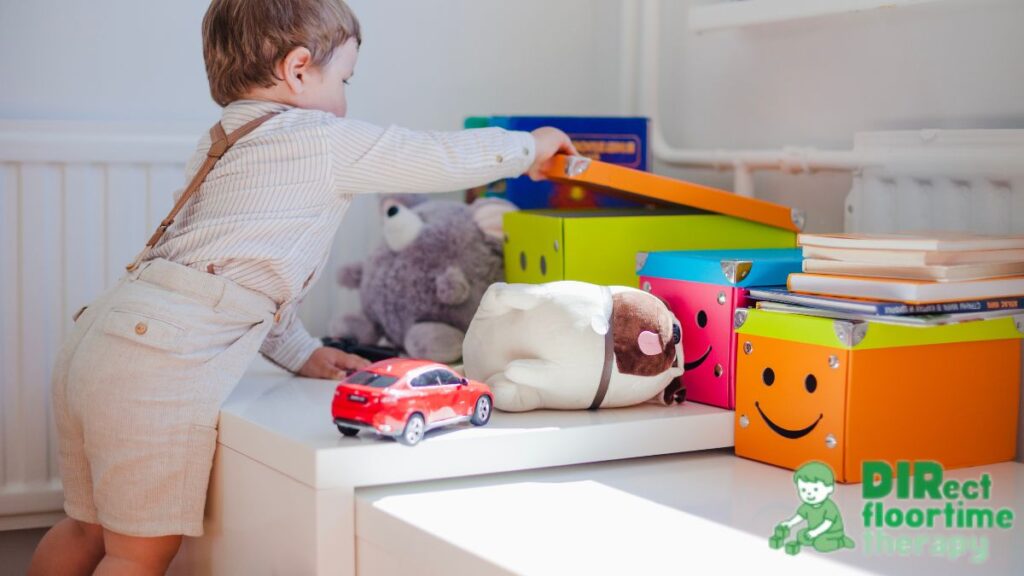
Flexibility and planning are two executive functions that often break down in children with ASD or ADHD.
Rigidity of Thinking (Flexibility): Cognitive flexibility is the ability to shift gears, think in new ways, or change a plan. Children with ASD often need predictability. ADHD makes it hard to switch focus because inhibition control is underdeveloped.
Children with ASD often have difficulty with set-shifting tasks, which are important measures of cognitive flexibility.
DIR Solution: DIR flexibility grows through playful challenges. If Ethan lines up cars, a parent might move a car or add a new toy. The goal is to acknowledge the change and adapt, not to stop the routine. Playful, low-pressure practice strengthens executive functioning kids.
The Architect’s Blueprint (Planning): Planning is thinking ahead, sequencing steps, and prioritizing tasks. Children with ASD or ADHD often have gaps in this blueprint.
Why the Struggle: ADHD affects working memory and task initiation. If Ethan cannot hold the plan in mind, he may forget steps. ASD can affect central coherence, the ability to see the big picture. Ethan may focus on putting on one shoe and forget the other.
DIR Strategies for Boosting Planning and Flexibility

DIR Floortime builds internal motivation, not through rewards or punishment.
Improving Planning: Purposeful Play
Planning grows through “circles of communication,” back-and-forth exchanges with a child.
- Follow, Then Facilitate: Join Ethan’s train play. Gently place a block on the track. He decides: remove it, push it, or stop. This teaches problem-solving.
- Make it Multi-Step: Add steps. Find a crane (step 1), lift the block (step 2), push the train (step 3). You scaffold memory and sequencing.
- Expand the Theme: Turn play into a story, like “The Train Needs to Rescue Animals.” Planning now includes emotional engagement, making skills meaningful.
Enhancing Flexibility: Emotional Organization
Flexibility starts with emotional organization. A child who is over-stimulated cannot shift thinking.
- Calm Before the Challenge: Use the “Individual Differences” component. Play in quiet areas, with soothing activities like slow rocking or deep pressure.
- Emotional Check-ins: During transitions, name feelings. “You look sad because we need to clean up blocks.” Naming emotions builds self-regulation.
- The “Pretend” Change: Introduce minor, pretend changes. If Ethan wants a blue crayon, suggest using red for the dragon’s fire. Pretend reduces pressure, allowing cognitive shifting practice.
Chunking and Scaffolding
Breaking complex tasks into smaller steps prevents overwhelm. For example:
| Task | Chunked Steps |
| Pack backpack | 1) Pencil case, 2) Notebook, 3) Lunchbox, 4) Water bottle |
| Clean room | 1) Toys, 2) Books, 3) Clothes, 4) Trash |
| Morning routine | 1) Bathroom, 2) Get dressed, 3) Breakfast, 4) Shoes |
This approach improves planning skills autism by simplifying cognitive demands and reinforcing sequential thinking.
Strategies for Daily Implementation
Here are practical ways to apply DIR approaches at home or school:
- Structured Play Sessions: 20-30 minutes of child-led play incorporating problem-solving.
- Routine Cards: Visual steps for dressing, chores, or homework.
- Mini-Goals: Break tasks into achievable milestones with rewards or encouragement.
- Transition Practice: Gradually introduce small changes in schedule to build flexibility.
- Reflective Conversations: Discuss emotions and decision-making after tasks.
Measuring Progress
DIR focuses on development rather than standardized scores. Key indicators include:
- Increased ability to plan and execute tasks independently
- Improved adaptation to changes in routines
- Better emotional self-regulation in daily activities
- More effective communication of needs and strategies
Longitudinal studies show children engaged in DIR interventions demonstrate sustained improvements in problem-solving, emotional regulation, and flexibility (Greenspan & Wieder, 2006; Klin et al., 2007).
Evidence-Based Impact and the Future of Executive Function Support
Supporting executive function in ASD and ADHD requires integrating cognition, emotion, and social engagement.
- Proven Outcomes: DIR/Floortime interventions improve social-emotional development, communication, and relational skills.
- Foundational Growth: Pajareya and Nopmaneejumruslers found that strengthening social-emotional skills supports higher-level executive functions.
- Integrated Perspective: Planning, flexibility, and problem-solving link closely to emotional regulation and social interaction.
- DIR Flexibility in Practice: Children learn to adjust, refine, and redesign plans rather than follow rigid routines.
- Empowering Growth: With relational support, children can navigate real-life challenges confidently, building independence and creativity.
FAQ: Unique and Attention-Grabbing Insights
Q1: Is DIR only for nonverbal kids?
No. DIR works for verbal children too. Play evolves into storytelling and imaginative role-play that challenge flexible thinking.
Q2: How does DIR address sensory differences?
DIR tailors activities to a child’s sensory profile. Sensory seekers enjoy movement and sound. Avoiders get quiet, gentle play. Sensory work primes emotional engagement.
Q3: Can I practice floortime without certification?
Yes! Use the “three Fs”: Follow the child’s lead, Form circles of communication, Fun. Spend 20 minutes a day joining their world. No demands, no corrections.
Q4: Does DIR encourage repetitive behavior?
Temporarily, yes. Repetitive play helps self-regulation. Adults join the play and expand it. Example: If a child lines up cars, add a “gas station” block to create new sequences.
Q5: Can DIR help with black-and-white thinking?
Yes. DIR flexibility introduces ambiguity in fun ways. Stories with gray areas teach children to hold conflicting ideas, promoting nuanced thinking.
Helping Your Child Thrive Through Everyday Challenges
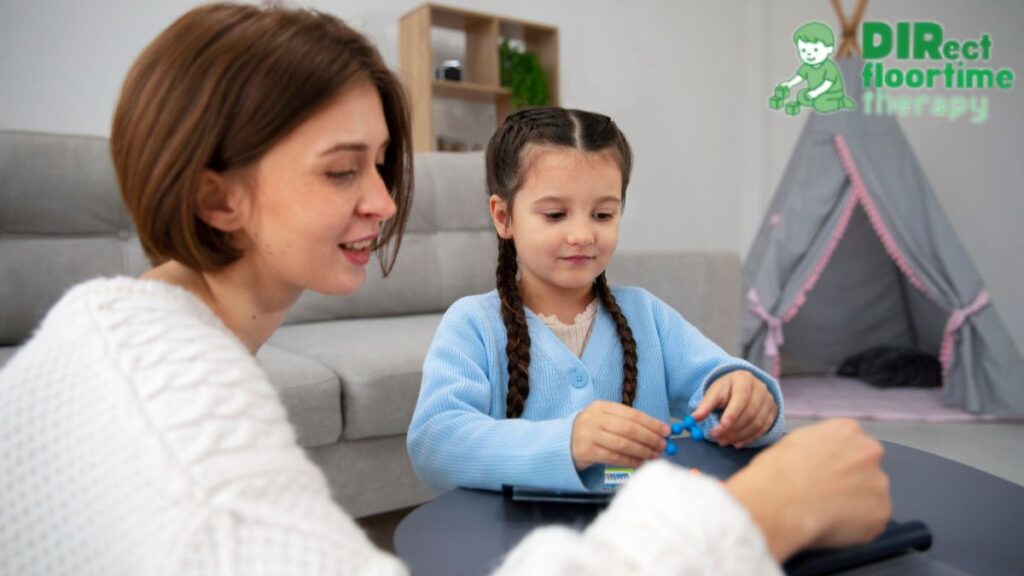
Kids with executive functioning challenges face daily hurdles that can feel overwhelming. DIRect Floortime brings flexibility, targeted planning skills autism, and emotional organization together to turn these hurdles into growth opportunities. Child-led, playful strategies guided by DIRect Floortime help children explore their potential while building important life skills. With relational support, kids develop confidence, creativity, and flexible thinking in practical, enjoyable ways. Families across New Jersey have noticed how these approaches transform tricky moments into meaningful learning experiences. Each child’s journey is unique, and understanding their emotional world is essential for growth and resilience. If you want to see how these strategies can help your child, reach out today. We can show you personalized ways to support executive functioning, emotional organization, and planning skills autism, helping your child thrive, one playful, guided step at a time.

