

Key Points:
- Child-centered DIR/Floortime builds foundational focus, emotional regulation, and early social readiness.
- Personalized sensory-aware strategies support smoother classroom transitions and confident daily school participation.
- Playful interaction helps children manage feelings, connect with peers, and enjoy learning.
Getting ready for school is an exciting milestone, but it can also be a complex journey for families navigating developmental differences. For children with school readiness autism needs, preparing them for the classroom requires strategies that balance skill-building with emotional support. DIR/Floortime offers a relationship-based, playful approach that fosters focus, social readiness, and emotional regulation. By emphasizing a child’s developmental profile, unique differences, and interpersonal connections, this method helps children enter school equipped to manage routines, peer interactions, and learning challenges.
Curious about how DIR can make transitions smoother? Read on for practical examples, strategies, and expert insights that guide children from home to school with readiness and ease.
DIR for Preschool
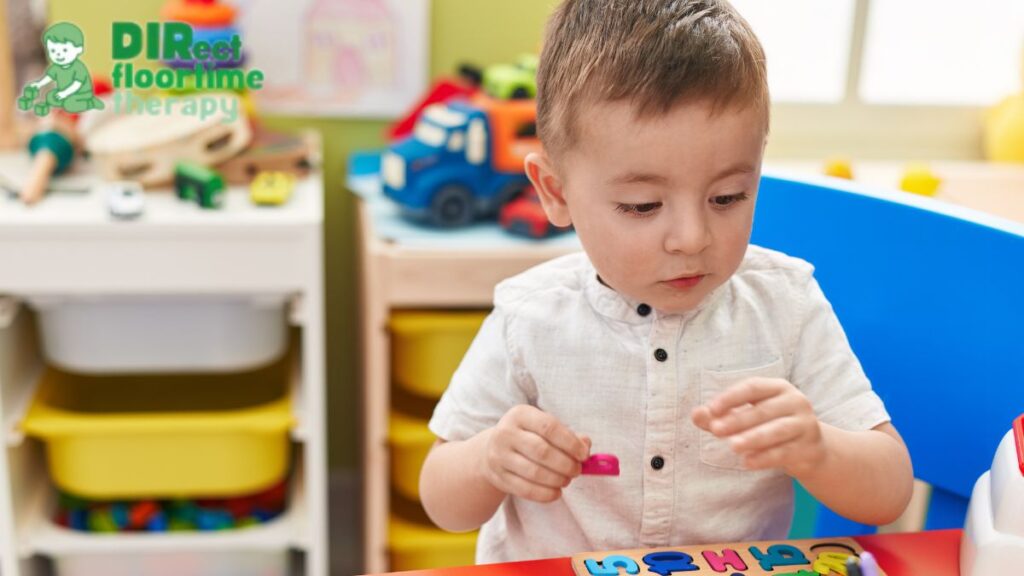
Imagine a preschool classroom where every child is seen through the lens of their unique developmental patterns. Take Lucas, a 4-year-old with sensory sensitivities and bursts of excitement during group play. In a DIR-informed preschool, the teacher observes Lucas closely, noting that he becomes overstimulated during circle time but thrives during hands-on activities with blocks and textured toys. Using this insight, she integrates short, interactive sessions of shared play before large-group activities.
Through Floortime sessions, Lucas practices regulating his emotions while engaging in imaginative play. He learns to wait his turn, negotiate with peers, and solve problems within playful scenarios. Studies by Greenspan and Wieder (2006) indicate that structured Floortime activities significantly improve emotional regulation and social engagement in preschool-aged children. By tailoring activities to Lucas’s developmental level, the teacher encourages curiosity, self-expression, and focus, creating a foundation for later academic and social success.
Practical classroom strategies include:
- Observation-based planning: Monitor each child’s responses and sensory needs to customize activities.
- Short, playful routines: Break down tasks into manageable segments, alternating quiet and active play.
- Peer-mediated interactions: Pair children for shared projects or cooperative play to nurture social skills.
This approach demonstrates that DIR for preschool isn’t just therapy, it’s a blueprint for embedding emotional and cognitive growth into everyday learning.
Social-Emotional Prep
How can children learn to manage feelings while interacting with peers? Social-emotional prep under DIR emphasizes co-regulation, empathy-building, and playful problem-solving. Take Maya, a child who becomes frustrated when a peer accidentally knocks over her block tower. Instead of redirecting her immediately, the teacher uses a Floortime moment: “I see you’re upset. How can we rebuild it together?”
Such guided interactions help children identify emotions, practice coping strategies, and negotiate solutions with peers. Research by Izuno-Garcia et al. (2022) found that children with autism who received social-emotional interventions through DIR displayed increased cooperative play and reduced disruptive behaviors, supporting smoother integration into classroom routines.
Key strategies for social-emotional prep:
- Emotion labeling: Encourage children to articulate feelings like “angry,” “sad,” or “excited” during moments of dysregulation.
- Role-playing: Use dolls, puppets, or miniature scenarios to model conflict resolution.
- Shared problem-solving: Guide children to propose solutions collaboratively rather than dictating the outcome.
A simple table to illustrate social-emotional strategies:
| Skill Target | Activity Example | DIR Principle Applied |
| Identifying feelings | Feeling chart during morning circle | Emotional recognition |
| Turn-taking | Shared block-building | Reciprocal interaction |
| Managing frustration | Sensory break after conflict | Self-regulation support |
Through playful engagement, children gain practical experience in understanding emotions, reading social cues, and responding appropriately, skills essential for navigating the school environment successfully.
Transitions to School
Transitions can be challenging for any child, particularly those with unique sensory and emotional needs. DIR supports smooth transitions to school by using anticipation, rehearsal, and guided practice. Consider Ethan, who struggles with leaving his parent at the classroom door. His teacher implements a social story paired with Floortime exercises: first, Ethan pretends to “enter school” with toy figures; then, he practices waving goodbye and greeting his teacher in short, structured sessions.
Research indicates that children who engage in preparatory social-emotional activities demonstrate fewer behavioral disruptions during transitions and adapt more readily to new routines (Williams et al., 2019). By using Floortime play to simulate the school day, children experience transitions in a safe, low-pressure context.
Transition strategies:
- Social stories: Step-by-step visual narratives that outline school routines.
- Predictable sequences: Establish clear arrival, activity, and dismissal routines.
- Gradual exposure: Allow children to visit classrooms or meet teachers ahead of time.
For example, when practicing the morning drop-off, Ethan carries a small backpack filled with familiar items. This tactile input offers sensory regulation, helping him stay calm and focused. Pairing this with verbal cues and playful rehearsal strengthens both emotional and cognitive readiness for school.
Integrating DIR into Daily Learning
DIR principles can be embedded into classroom routines without disrupting the schedule. Teachers can create emotionally supportive spaces, introduce sensory-rich activities, and tailor learning to individual developmental profiles.
Classroom tips:
- Emotion corners: A cozy area with soft seating and fidget toys for self-regulation.
- Choice boards: Let children select from several activities, promoting engagement.
- Embedded learning: Use children’s interests, like dinosaurs or trains, to teach counting, colors, or storytelling.
Research by Greenspan and Wieder (2006) highlights that using a child’s interests to drive learning increases sustained attention and skill acquisition. For instance, if a child loves trains, lessons about sequencing can be framed around constructing tracks, reinforcing both focus and problem-solving abilities.
Monitoring Progress with DIR
Tracking development ensures that strategies remain effective and aligned with each child’s needs. Using both qualitative and quantitative measures allows educators to refine approaches in real time.
Monitoring tools:
- Daily notes on engagement, emotional regulation, and social interactions.
- Video recordings for reflective review and team discussions.
- Checklists of developmental milestones, such as following instructions, sharing, and completing tasks.
Setting clear, measurable goals helps translate playful sessions into meaningful progress. For example:
- Goal: Child initiates cooperative play for five minutes, three times per week.
- Tracking: Observational checklist during free-play periods.
- Adjustment: Extend or shorten sessions based on the child’s engagement level.
This systematic approach ensures that each child builds focus, emotional regulation, and social readiness progressively and sustainably.
Encouraging Parent Involvement
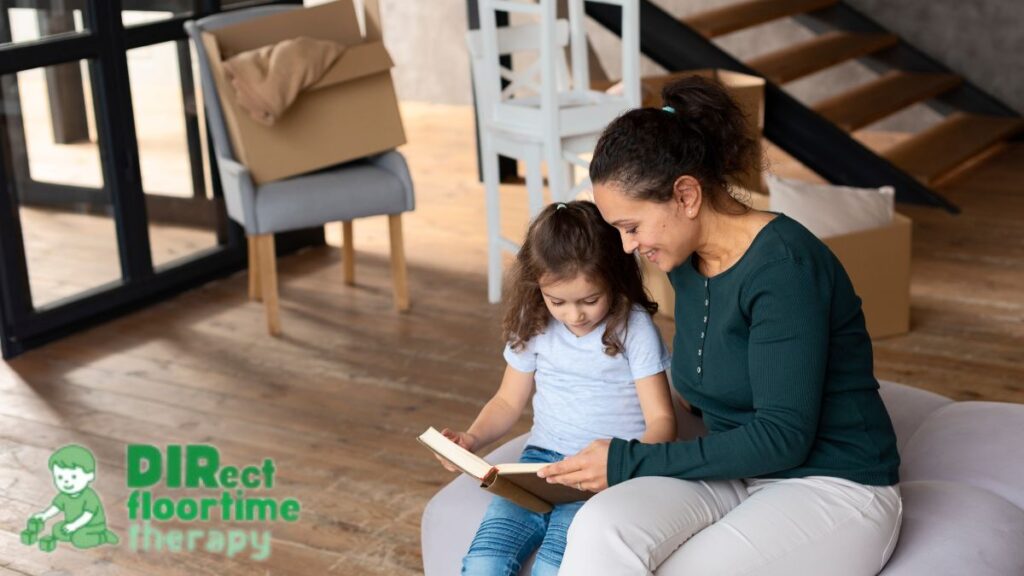
DIR encourages collaboration between educators and parents. Consistency between home and school environments strengthens skill generalization. Parents can practice short Floortime sessions at home, using playful interactions to reinforce problem-solving, turn-taking, and emotion recognition.
Parent strategies:
- Engage in 10–15 minutes of child-led play daily.
- Use storytelling or pretend scenarios to practice routines.
- Observe and note triggers that help or hinder focus and social engagement.
These small, guided interventions can profoundly impact a child’s ability to manage transitions, follow routines, and build peer relationships.
FAQ
1. Can DIR/Floortime help children who are shy or hesitant in group settings?
Yes, Floortime uses child-led interactions to gently encourage participation. Through modeling and playful engagement, even hesitant children can build social skills over time.
2. How often should Floortime sessions occur for preschool-aged children?
Experts recommend 10–20 minutes per session, two to three times daily, with flexibility to extend when children are highly engaged.
3. What role does sensory input play in emotional regulation?
Sensory activities help children manage overstimulation and support focus. Movement breaks, textured toys, and weighted items can enhance attention and emotional balance.
4. Can DIR strategies be adapted for children with multiple developmental differences?
Absolutely. DIR’s individualized approach accounts for cognitive, sensory, and emotional variations, tailoring activities to each child’s needs and strengths.
5. How do social stories complement Floortime practice?
Social stories provide visual and narrative guidance for routines, helping children anticipate events and practice appropriate behaviors in a safe, structured context.
Helping Young Learners Thrive
Preparing children for school takes a careful mix of skill-building, emotional support, and relationship-focused guidance. DIRect Floortime gives a framework to nurture focus, social readiness, and emotional regulation while respecting each child’s unique profile. Using DIRect Floortime principles in preschool activities, social-emotional prep, and school transitions helps families and educators in New Jersey guide children to engage meaningfully, explore confidently, and handle routines with ease. Curious how these strategies can make daily transitions playful and positive? Reach out to us for practical examples, step-by-step guidance, and expert tips to support your child’s growth. With the right approach, every learning moment becomes a chance for connection, curiosity, and joy. This sets the stage for a confident, successful start to school, while keeping children engaged and supported every step of the way.

