
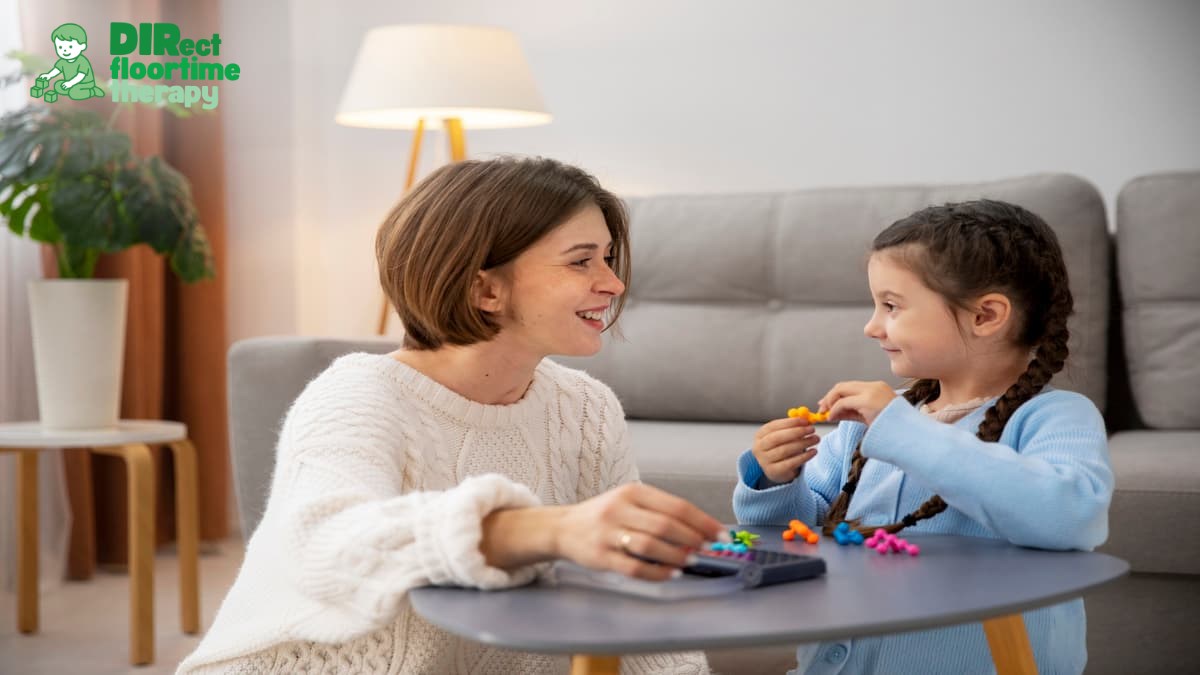
Key Points:
- You can transform your living room into a DIR-Floortime play space with simple adjustments.
- Sessions revolve around child-led play, emotional connection, and gradual expansion of interaction.
- Everyday routines become opportunities for developmental work, not just “therapy time.”
DIR Floortime is a therapeutic play method built around understanding your child’s developmental level, honoring their individual differences, and leveraging your relationship to promote growth. The name “Floortime” hints at one of its core practices — adults physically joining children on the floor, engaging through their world and expanding it together.
If you are caring for a child who benefits from social-emotional support or developmental scaffolding, this article shows exactly how DIR Floortime can be translated into your living room environment. We walk you through setup, session structure, strategies, examples, and tips to integrate Floortime into daily life.
By the end, you’ll know not just what Floortime is, but what it looks like in practice, step by step, in your own home.
What Is DIR Floortime? Foundations You Need
Before you rearrange the furniture, it helps to know the guiding principles so every move aligns with the method.
Core Elements: D, I, R
- Developmental (D): Focus on where your child is emotionally and socially. Match your play to their current capacity, then gently prompt the next level.
- Individual Differences (I): Every child has a unique sensory, motor, attentional, and cognitive profile. Recognize how they respond to input (noise, light, touch, movement) and adapt accordingly.
- Relationship (R): Emotional connection is the engine. You build trust, safety, and communication by being attuned, responsive, and playful.
Floortime, then, is the practice — structured or semi-structured play driven by the child’s interests, meant to “open and close circles of communication” and scaffold to deeper developmental milestones.
Goals & Milestones
DIR Floortime aims to help children advance through six functional developmental levels:
- Self-regulation and interest in the world
- Engagement and forming relationships
- Two-way communication
- Complex communication
- Emotional ideas
- Emotional thinking
As the child and caregiver interact, the circle of communication (initiate → respond → expand → return) repeats and becomes richer.
Clinical studies suggest Floortime helps with social–emotional functioning, flexibility, and parent–child relationships, though evidence strength varies.
Setting Up Your Living Room for DIR Floortime
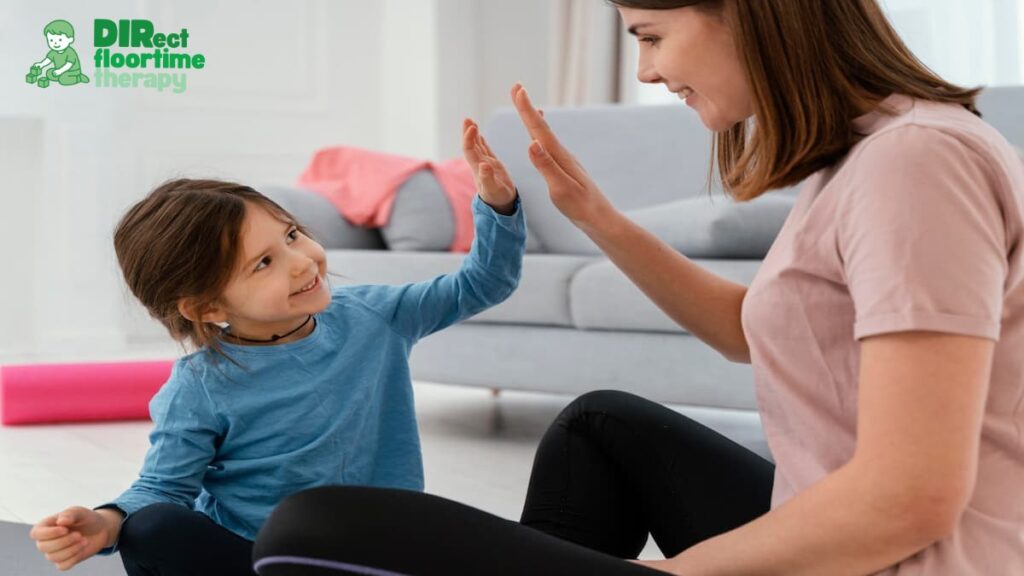
Your physical environment can either foster connected play or become a barrier. Here’s how to make your living room a Floortime-friendly zone.
Environmental Principles
- Low distraction: Remove screens (TV, tablets) during play. Keep clutter minimal so tactile or visual overstimulation is reduced.
- Safe and comfortable: Use soft rugs or mats, cushions, and ensure there is space for movement without bumping into furniture.
- Sensory tuning: Be mindful of lighting (soft, not harsh), ambient noise (minimize sudden noises), and textures. Use things your child tolerates (weighted blanket, tactile toys) if helpful.
- Accessible materials: Keep favorite toys, art supplies, sensory play kits, books within reach so you don’t interrupt the flow by retrieving items.
- Defined play zones: You don’t need rigid divisions, but have a “play corner” or area that signals “this is where we do our fun work.”
Approximate Layout Table
| Area | Purpose | Suggested Items |
| Floor/central zone | Main interaction space | Rugs, cushions, floor mats |
| Toy shelf within reach | Easy access to play materials | Favorite toys, blocks, art supplies |
| Sensory corner | Regulation or calm time | Soft lighting, fidget toys, weighted lap pad |
| Open wall or board | Visual or drawing support | Whiteboard, easel, magnetic board |
This layout gives your living room flexibility — sometimes free play, sometimes more structured, sometimes calm breaks.
What a DIR Floortime Session Looks Like
Here is a detailed breakdown of how a session might play out in your living room.
Typical Duration & Frequency
- The ICDL (the DIR governing body) recommends around 12 hours per week of Floortime interactions at home.
- These hours can be short 20- to 30-minute sessions or embedded in everyday routines.
- Some programs suggest up to 15 hours/week, but integration into daily life makes this more feasible.
Step-by-Step Session Flow
Below is an approximate flow, which you adapt to your child’s pace and mood:
- Tuning in & observation (1–2 min)
- Sit quietly and observe the child’s current play, mood, or interest.
- Try not to interrupt immediately; notice cues (body, gaze, sounds).
- Joining the child
- Enter their play world: imitate sounds, actions, or movements they are doing.
- Use an expressive face, gentle tone, minimal verbal load initially.
- Circles of communication
- Let them initiate: they play, you respond (mirroring or adding small variation).
- Then expand: introduce a small new idea, toy, or question to push the interaction forward.
- Wait: allow the child time to respond or lead again.
- Challenge and scaffold
- Once rapport is firm, you introduce a slight challenge: ask “what if…,” place a barrier that prompts help, or extend the play narrative.
- But stay close: always follow their emotional lead, not force.
- Closure and reflection
- End when attention wanes or fatigue sets in.
- Reflect internally: what worked, what cue was missed?
- Optionally verbalize a closing (“That was fun, let’s rest now”) to help the child adjust.
Example in Your Living Room
Let’s say your child is stacking blocks in a corner of the room. Here’s how a session might evolve:
- You sit beside them, stacking blocks in the same pattern (joining).
- They pause; you place a block slightly differently, softly say, “Look, what happens if I put it here?” (expanding).
- They knock it down, giggle; you mimic the knocking, add another and cue, “Uh oh, help me?” (challenge).
- They push your hand, you laugh and rebuild together (circle return).
- You sense their interest waning, shift to a soft toy or book, close the interaction.
Over time you may bring in drawing, pretend play, or small story sequences.
Strategies and Tips for Effective Living Room Floortime
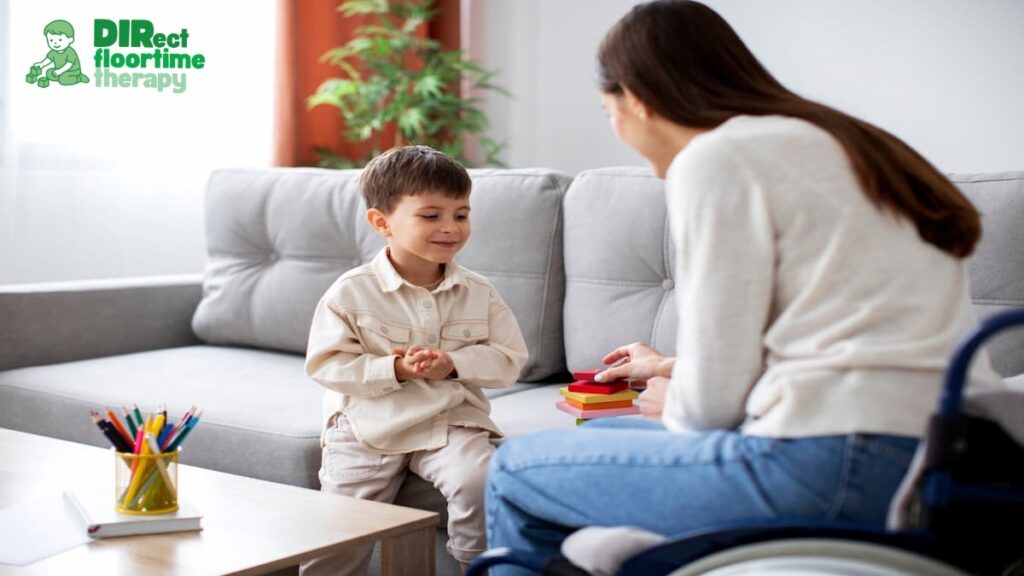
Here are deeper tips to help your sessions be more effective and natural.
Be Patient with Pauses
Silence or waiting is part of the process. After you offer a cue or extension, wait 3–5 seconds or more for your child to respond emotionally or physically. Don’t rush to fill it.
Use Affect & Enthusiasm
Emotion is powerful. Use facial expressions, vocal tone, and positive energy. Joy and surprise help draw children into more complex interactions.
Adjust Your Complexity
Match your expansions to what the child can handle. If they resist, scale back; if they engage, push gently into new ideas.
Watch Sensory Cues
If the child becomes overwhelmed—covering ears, fidgeting, looking away—pause or shift to a regulation activity (deep breaths, rocking, sensory toy).
Rotate Toys & Materials
Introduce gentle novelty: a new texture, prop, or theme. But keep familiar favorites always available to maintain safety and comfort.
Use Everyday Activities
Mealtime, dressing, or snack time can become mini Floortime moments. For instance, let the child hand you utensils, you mirror, then ask “What do I do next?” to prompt them to lead.
Involve Siblings or Family
When siblings or family members join, instruct them in basic Floortime principles—following the child’s lead, imitating, expanding. This widens opportunities for play.
Reflect After Sessions
Afterward, jot notes:
- What cues did I miss?
- When did attention dip?
- Which expansions worked?
Over time, pattern emerges, and your responsiveness sharpens.
Integrating Floortime Into Daily Life
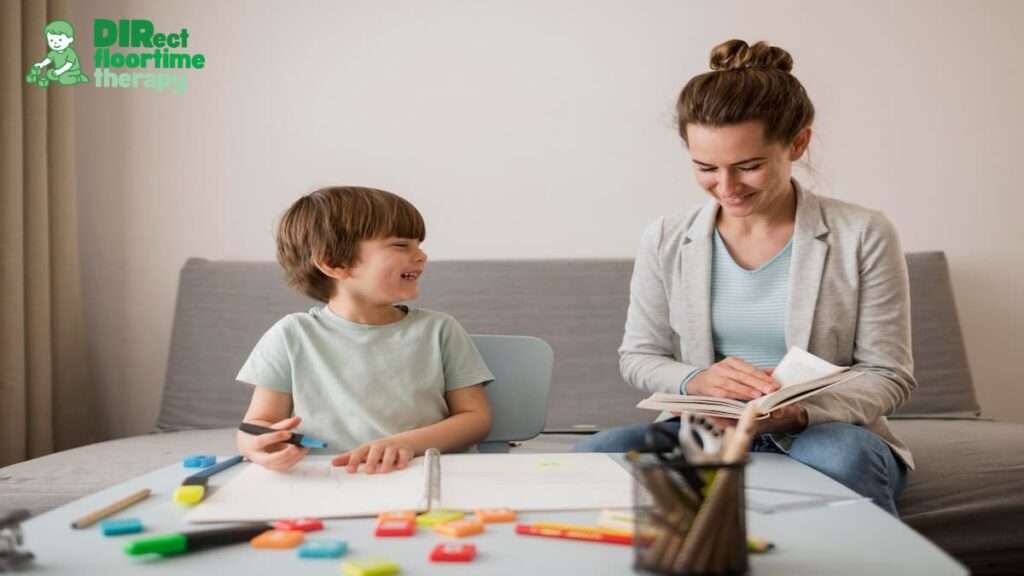
Part of the strength of living room implementation is seamless integration. Here’s how to make Floortime part of your family rhythm.
- Schedule but stay flexible
- Mark regular blocks (e.g. after nap, post-snack) but be ready to shift based on the child’s mood.
- Mark regular blocks (e.g. after nap, post-snack) but be ready to shift based on the child’s mood.
- Routine transitions as opportunities
- Use transitions like “let’s carry this book to the couch together” to spark collaborative movement.
- Use transitions like “let’s carry this book to the couch together” to spark collaborative movement.
- Carry cues across settings
- If your child leads pretend play on the floor, carry that style to table play or outings.
- If your child leads pretend play on the floor, carry that style to table play or outings.
- Use language cues
- Short prompts like “You lead” or “My turn” echo the Floortime circle structure.
- Short prompts like “You lead” or “My turn” echo the Floortime circle structure.
- Document progress
- Maintain a simple log: date, duration, key interactions, cues missed. Over weeks you pattern growth.
Frequently Asked Questions
1. Do I need special toys or equipment to do Floortime in my living room?
No, Floortime works best with simple, familiar items. Use what your child already enjoys and keep novelty gentle.
2. What if my child walks away or refuses to engage?
Pause, allow a short break, or move to a regulation activity. Return when calm. Never force the interaction.
3. How long should each Floortime session be?
Start with 20–30 minutes if possible, but shorter sessions are acceptable. The key is multiple meaningful interactions per day.
4. Can siblings join or interfere with the session?
Yes, siblings can participate if they learn basic Floortime principles — follow the child’s lead, mirror, expand — to support play.
5. How do I know I’m doing it “right”?
Look for signs of engagement, shared attention, return to play, and gradual expansion. Use coaching feedback and reflection logs to refine your approach.
Bringing DIR Therapy Home, One Moment at a Time
DIR Floortime Therapy transforms familiar routines into developmental opportunities. Through laughter, gestures, and curiosity, children strengthen emotional bonds and build essential skills—all within the comfort of their own homes. Parents gain confidence as they learn how small, responsive interactions spark lasting progress.
By practicing Floortime techniques in everyday settings, you help your child discover connection and joy in natural ways. Families in New Jersey and beyond can turn simple moments into powerful steps toward communication and growth.
If you’d like to learn how DIR Therapy can fit into your family’s rhythm, contact us today to begin your home-based journey.

