Key Points
- Autistic masking is the exhaustive process of suppressing natural behaviors to fit into social norms at school, leading to a “regulatory debt” that must be paid at home.
- The delayed meltdown mechanism explains why a child appears “fine” in the classroom in Livingston or Princeton but becomes aggressive or tearful the moment they see their safe person.
- DIR/Floortime home arrival protocols focus on low-demand, high-connection transitions that prioritize co-regulation over homework or chores.
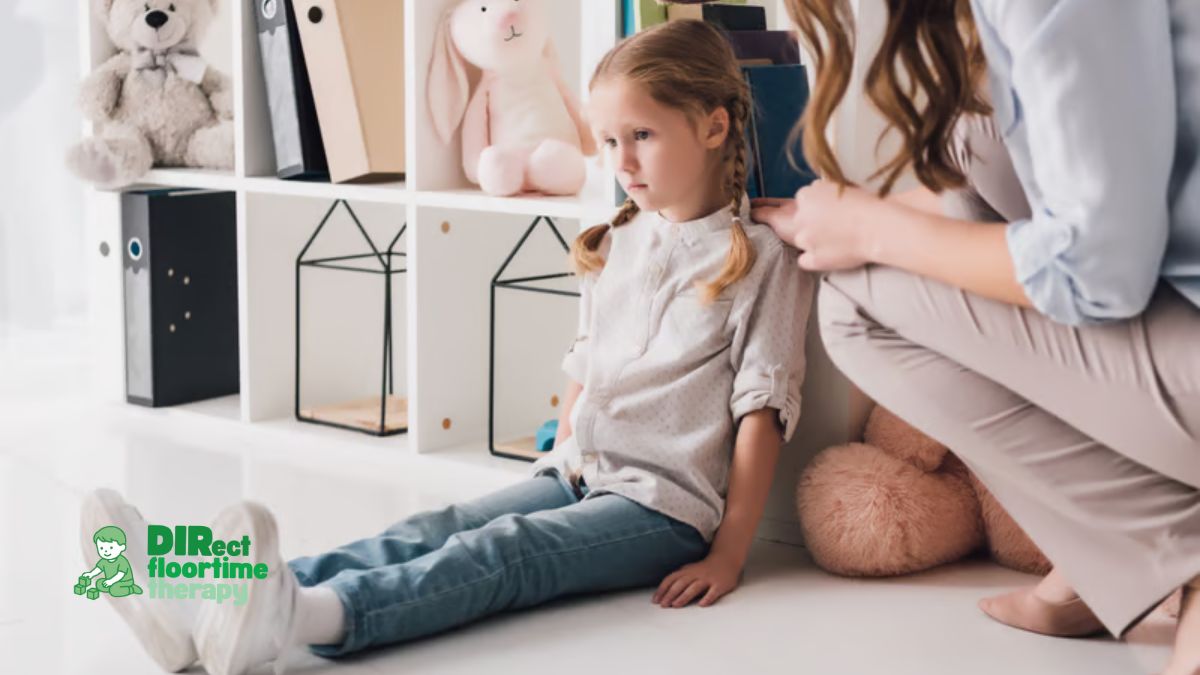
It is a scenario played out in households across Livingston, New Jersey, every weekday afternoon. A mother waits at the bus stop, greeted by a teacher who says, “He had a wonderful day! He followed every direction and played nicely with his peers.” But the moment the front door of their home closes, that same “wonderful” child throws their backpack across the room and collapses into a screaming meltdown. The school sees one child, compliant, quiet, and capable. The home sees another, volatile, exhausted, and inconsolable.
For many NJ parents, this discrepancy is deeply confusing and often leads to feelings of guilt or self-doubt. You might wonder: Is it me? Am I doing something wrong at home that makes them act this way? In the clinical world of autism, this phenomenon is widely recognized as the after-school meltdown or the “coke bottle effect.”
By using the DIR/Floortime model, we move beyond the confusion. We look at the Individual-difference of how a child’s nervous system handles the immense sensory and social load of a New Jersey school day. We recognize that the child isn’t “acting out”. They are finally letting go of a day’s worth of built-up pressure. This article explores the mechanics of after-school meltdowns and provides a blueprint for supporting your child’s decompression.
The “Coke Bottle Effect”: Understanding Autistic Masking
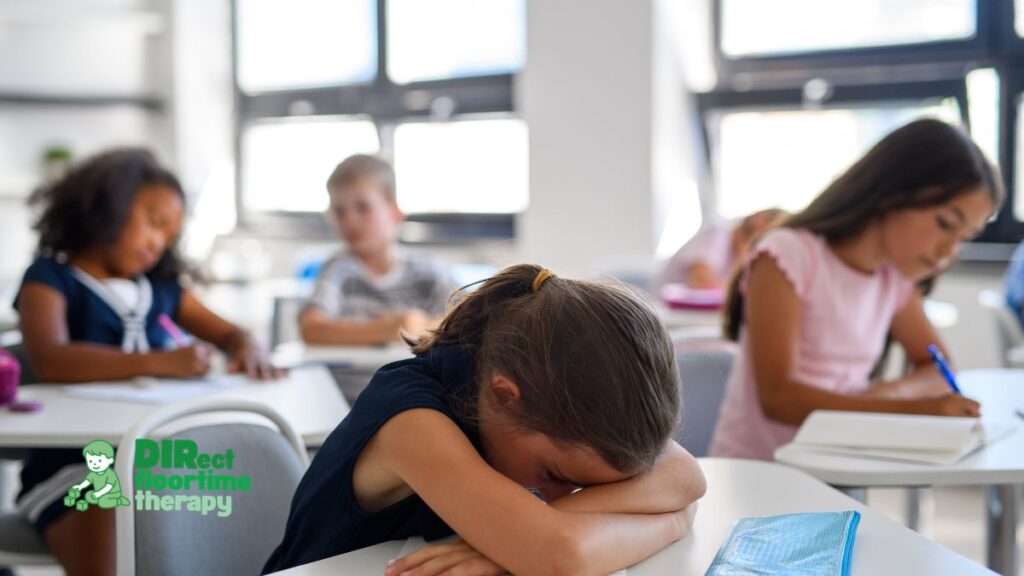
To understand why your child “falls apart” in Princeton or Ridgewood, you have to understand what they were doing all day. Most autistic children engage in a process called masking or camouflaging.
What is Masking?
Masking is the conscious or subconscious effort to hide autistic traits. This includes:
- Suppressing the urge to “stim” (fidgeting or rocking) to avoid looking “different.”
- Forcing eye contact that feels physically uncomfortable.
- Managing intense sensory pain from loud hallways or buzzing fluorescent lights without complaining.
- Navigating the “hidden curriculum” of social rules that don’t come naturally.
Research by Pearson and Rose (2021) on autistic masking highlights that while masking may help a child “fit in” at school, it comes at a massive physiological and emotional cost. Think of your child like a bottle of soda. Every time they have to suppress a need or endure a sensory assault at school, the bottle gets shaken. By 3:00 PM, the pressure is at its peak.
The Safe Haven Paradox
Why does the “explosion” happen at home? Because home is where the child feels safe. As explored by Lai et al. (2017) in the Journal of Autism and Developmental Disorders, autistic traits often become more pronounced in “low-stakes” environments. Your child loves and trusts you enough to show you their raw, unfiltered exhaustion. The meltdown isn’t a sign of your failure as a parent; it is a sign of their security in your relationship.
The Sensory and Social Demands of a New Jersey School Day
Even in the best inclusive schools in Cherry Hill or Montclair, the school environment is inherently challenging for autistic children.
- The Sensory Assault: The screech of chairs on linoleum, the smell of the cafeteria (see Blog 8), and the visual clutter of “educational” posters create a constant state of low-level fight-or-flight.
- Executive Functioning Overload: Moving from math to recess to art requires transitions that tax the brain’s executive centers. Research by Yerys et al. (2007) confirms that cognitive flexibility deficits in ASD make routine transitions disproportionately effortful.
- Social Navigation: Constant “unstructured” social time is exhausting for a child who has to manually process social cues that others process automatically.
By the time the bus drops them off in Middletown, their “regulatory battery” is at 0%.
The DIR/Floortime Approach: The “Home Arrival Protocol”
In a traditional household, the first questions are often: “How was your day?” or “Do you have homework?” To a dysregulated child, these are high-demand questions that can trigger an immediate meltdown. In DIR/Floortime, we prioritize Co-Regulation, the 1st and 2nd Developmental Milestones, before any other interaction.
1. The “Low-Demand” Entry
When your child walks through the door in Hoboken, don’t ask questions. Instead, offer a quiet, supportive presence.
- The Quiet Greeting: “Hey, I’m so glad you’re home. I have your favorite snack on the table.”
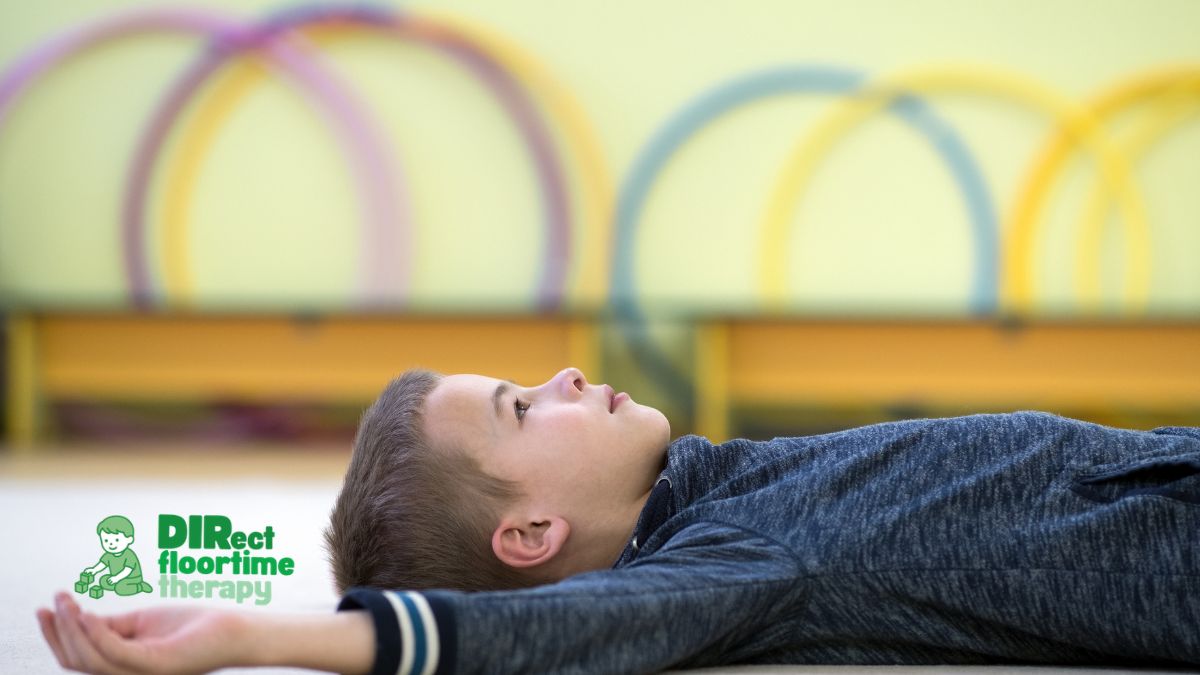
- Respect the Silence: Many children need 30 to 60 minutes of “non-verbal” time to decompress. If they want to go to their room and stare at the ceiling or play with LEGOs alone, let them.
2. Sensory “Refueling”
Identify what your child’s nervous system needs to recover.
- Proprioceptive “Heavy Work”: Some children need to move. A swing in the backyard, a trampoline, or a crash pad in the living room can help discharge the day’s pent-up energy.
- The Sensory “Cocoon”: Other children need “low-input.” A darkened room, noise-canceling headphones, or a weighted blanket can help reset the auditory and visual systems. Research by Gee et al. (2017) on weighted blankets supports their effectiveness for reducing anxiety in children with ASD.
3. Connection Without Pressure
Once the child has settled slightly, use Floortime principles to reconnect.
- Parallel Play: Sit near them while they play, but don’t ask to join yet. Just “be” there.
- Follow the Lead: If they start to “stim” or move rhythmically, join them gently. This signals that they are in a “judgment-free zone.”
Parent Coaching: Navigating the “Delayed Meltdown”
At Direct Floortime, we coach parents in Westfield and Teaneck to stop taking the after-school behavior personally. Your child isn’t “giving you a hard time.” They are “having a hard time.” Research by Hastings (2002) on parental stress in autism confirms that understanding the neurological basis of behavior significantly reduces caregiver burnout and improves family outcomes.
Shifting the Mindset
- The IEP Advocacy: If the after-school meltdowns are severe, it’s time to talk to the school. Just because the child is “fine” at school doesn’t mean the school environment is working. Request a “Sensory Audit” of their school day.
- Communicating the Pattern: Share the research on masking with your NJ school district’s child study team. Help them understand that the “perfect” child they see is actually a child in distress.
Integrating Regulation into the NJ School-to-Home Transition
The transition actually begins the moment the child leaves the classroom.
- The “Transition Object”: Give your child a familiar sensory toy to hold on the bus or in the car. This provides a “bridge” of safety from school to home.
- Predictable Routines: Ensure the after-school routine is the same every day. “First snack, then quiet play, then we can talk about the day.” Predictability has been shown to significantly reduce anxiety and meltdown frequency in autistic children.
From “Falling Apart” to Finding Balance
The after-school meltdown is a signal that your child has worked incredibly hard all day to navigate a world that isn’t built for them. By providing a “soft landing” at home, you are giving them the space to recover, grow, and eventually build the resilience they need.
Research on DIR/Floortime by Solomon et al. (2007) highlights that when we support a child’s fundamental regulatory needs, their ability to handle social and academic demands improves over time. You are building their “window of tolerance,” one peaceful afternoon at a time.
FAQs
Why does my child only hit me, but never the teacher?
Because you are their “safe harbor.” They know your love is unconditional, so they feel safe letting out the “big” emotions they’ve held in all day.
Should I stop my child from “stimming” when they get home?
No! Stimming is a primary way that autistic people regulate their nervous systems. Research by Kapp et al. (2019) found that stimming serves crucial emotional regulation functions and that suppression increases distress. Let them rock, flap, or spin.
How long does “after-school decompression” typically take?
It varies, but many children need between 45 minutes and 2 hours of low-demand time before they are ready for social interaction or homework.
Is it okay to let them have “screen time” right after school?
For many autistic children, the “predictability” of a favorite show or game is highly regulating. Use it as a tool, but ensure it’s “low-stress” content.
What if the school says there “isn’t a problem” because they don’t see the meltdowns?
Document the meltdowns at home. Take videos (if safe) or keep a log. Bring this data to your next IEP meeting to prove that the regulatory cost of the school day is too high.
Creating a Sanctuary in Your New Jersey Home
Your home is more than just a house; it is a clinical environment for healing and growth. By acknowledging the reality of masking and providing a supportive home arrival protocol, you are helping your child thrive in both worlds.
At Direct Floortime, we help families across NJ navigate the “hidden” challenges of the school year. Whether you are in Voorhees or Maplewood, our team is here to help you turn the after-school hours from a time of dread into a time of deep, restorative connection.
Contact Direct Floortime today to learn how to support your child’s emotional regulation and end the cycle of after-school meltdowns.