
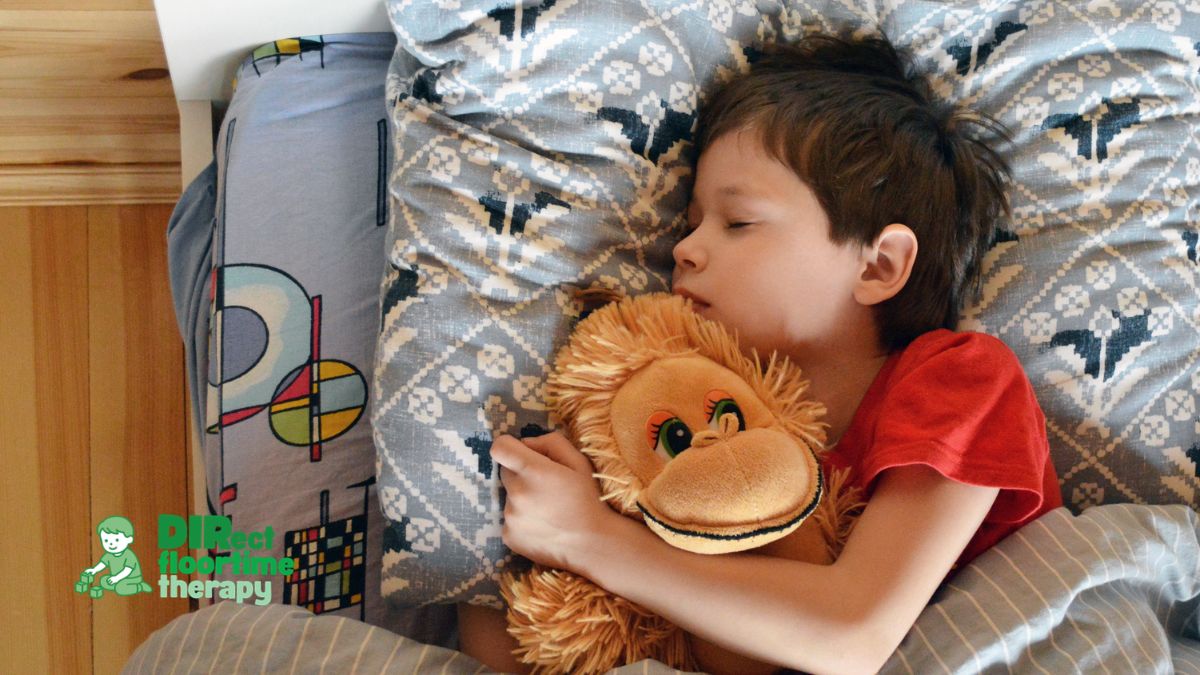
If you are the parent of an autistic child in New Jersey who hasn’t slept through the night in years, you have likely heard the same well-intentioned but useless advice: “You just need a more consistent bedtime routine.” Or worse: “You need to be stricter about staying in bed.”
Let me be very clear: Sleep difficulties in children with autism are not behavioral problems that better bedtime discipline will solve.
They are the neurological consequence of sensory processing differences, melatonin dysregulation, interoceptive differences, and a nervous system whose arousal architecture simply does not follow the same circadian pathway as neurotypical children. Understanding the specific mechanism driving your child’s sleep difficulty isn’t just helpful, it is the prerequisite for any strategy that will actually help.
To understand why, let me tell you about Reuben, Simone, and their eight-year-old son, Eli, from Parsippany, New Jersey.
The Night Map: A Window Into the Nervous System
Reuben and Simone had not slept through the night in four years. Between 11 PM and 5 AM, they lived in a state of hyper-vigilance, translating the sounds from their son’s room like a second language:
- 11:15 PM: The weighted blanket is removed and refolded. (Necessary for falling asleep; intolerable for sustained sleep.)
- 12:40 AM: The hall light flicks on. (Eli doesn’t need it to see; he needs it because the absolute darkness is aversive sensory input.)
- 2:15 AM: The sound of rocks being arranged. (Not insomnia; a nervous system trying to regulate itself enough to return to sleep.)
Their DIR/Floortime therapist didn’t promise to “fix” Eli’s sleep. She promised something better: a specific, neurological explanation for why this was happening. Because the bedtime routine wasn’t the problem and rigidity about it wasn’t the solution.
Most NJ families in this situation have already tried elaborate, consistent routines. They help partially, or not at all, because they address the behavioral surface of sleep without touching the neurological systems preventing the transition. DIR/Floortime addresses those systems directly.

The 5 Neurological Drivers of Autism-Related Sleep Issues
Before you change a single thing about your evening, you must identify which of these mechanisms is driving your child’s waking.
1. Melatonin Dysregulation (The Wrong Clock)
Your child isn’t refusing to sleep at 8:30 PM. Their pineal gland genuinely isn’t producing the neurochemical signal for sleep at that hour. For many autistic individuals, melatonin peaks later, at lower concentrations, or irregularly. You cannot behaviorally manage a jet-lagged brain.
2. Sensory Hypersensitivity (The Bedroom is Hostile)
At night, with external stimulation reduced to zero, two things happen: Sensory amplification (the neighbor’s heat pump becomes a roar) and interoceptive amplification (the heartbeat becomes a distraction). For Eli, darkness itself became aversive. The hall light wasn’t a quirk; it was a neurological correction.
3. Tactile Hypersensitivity (The Skin Cannot Rest)
Eight hours of contact with the wrong fabric is a sustained sensory assault. For proprioceptive seekers, a weighted blanket helps onset but hurts maintenance (like Eli, who removed it at 11:15 PM because his nervous system couldn’t sustain that deep pressure all night).
4. The Hypervigilant Nervous System (Anxiety as Arousal)
If your child spent the day masking, navigating social complexity, or enduring unpredictable transitions, they arrive at bedtime with a massive “arousal burden.” They aren’t “worrying” like an adult; they are neurophysiologically too activated to descend into REM.
5. Disrupted Sleep Architecture (The REM Deficit)
Research shows many autistic children spend less time in REM sleep, the stage required for emotional processing and regulatory resetting. Less REM = higher daytime reactivity = higher bedtime arousal = less REM. It is a vicious cycle.
DIR/Floortime Strategies That Work (By Mechanism)
Generic sleep hygiene says: Dim the lights and read a book. DIR/Floortime says: Identify the mechanism, then intervene.
For Melatonin Dysregulation:
- Morning light: 30-60 minutes of natural NJ morning light (hard in winter, but critical) anchors the circadian clock.
- Evening light reduction: Eliminate blue-spectrum light (screens, LEDs) two hours before bed. Use warm-toned, dim lamps.
For Tactile & Proprioceptive Issues:
- The “Compression Sheet” swap: For children who reject the weighted blanket at 2 AM, a fitted compression sheet provides constant deep pressure without the variable weight distribution. This solved Eli’s 11:15 PM waking.
For Visual Hypersensitivity (The Eli Solution):
- Don’t choose “dark vs. nightlight.” Find the specific quality of light. For Eli, a low, warm-toned LED strip under the bed frame provided enough ambient light to prevent the aversive “absolute darkness” without being bright enough to fully wake him.
For the 2 AM “Activity” (Rock Arranging):
- Do not interrupt. When Reuben and Simone stopped checking on Eli during his rock arrangement, the waking period dropped from 60 minutes to 40 minutes. The rocks were his nervous system’s self-selected regulatory tool. Interruption only extended the waking.
The Most Critical Tool: The Night Map
You cannot fix what you do not understand. For two weeks, do not change anything. Simply record a time-stamped neurological portrait of the night:
- When do they wake?
- What specific sensory behavior are they doing? (Rocking? Humming? Lining up toys?)
- How long does it take to return to sleep?
This map is not a sleep diary; it is a clinical diagnostic tool. It tells you if the issue is REM disruption (early waking), proprioceptive hunger (the 2 AM rocking), or auditory hypersensitivity (waking to the furnace kicking on).
A Note to the Sleep-Deprived Parent
Parental sleep deprivation is a clinical variable, not a parenting complaint. A parent who has not slept through the night in four years has compromised regulatory capacity, emotional availability, and therapeutic effectiveness. Addressing your child’s sleep isn’t a luxury. It is a prerequisite for developmental progress.
The Result
Six weeks after implementing the specific, mechanism-driven strategies from their night map—a compression sheet, the under-bed LED strip, protecting the rock arrangement, and adding a proprioceptive compression vest to the wind-down—Reuben texted their DIR/Floortime therapist at 6:45 AM.
“He slept through.”
It didn’t happen every night at first. But it happened again on Friday. And Tuesday. The four years of consecutive broken nights ended gradually, not with a single magic bullet, but with a direction that was finally, unmistakably right.
The takeaway? Stop trying to fix the behavior. Start decoding the nervous system. The night hours contain the information you need. You just have to learn how to read the map.