Key Points
- Tactile allodynia and hypersensitivity can make ordinary clothing textures like tags, seams, or certain fabrics feel physically painful to an autistic child.
- Proprioceptive processing plays a massive role in the “sequencing” of getting dressed; children may struggle to know where their limbs are without visual or tactile cues.
- DIR/Floortime principles emphasize shared problem-solving and child agency, moving away from morning “battles” toward collaborative sensory solutions.
In Teaneck, New Jersey, a mother recently shared a story that many parents of autistic children know by heart. Her son had a massive meltdown at 7:30 AM, not because he was being “stubborn,” but because a single tiny thread in his sock was bunched up against his toe. She had already cut the tags out of every shirt and bought “seamless” options, yet the morning still felt like a tactical mission that could fail at any second. To the outside observer, it was “just a sock.” To her son’s nervous system, it was an emergency.
For children on the autism spectrum, the skin is an active, often overwhelmed interface with the world. When your brain interprets a shirt tag as a scratchy brier or a tight waistband as a restrictive bind, “getting ready for school” becomes an act of physical endurance. Research suggests that between 69–93% of children with ASD experience some form of sensory processing difficulty, making sensory-related morning challenges among the most common concerns for families.
By applying the DIR/Floortime lens, developed by Dr. Stanley Greenspan and Dr. Serena Wieder, we look at the Individual-difference of how a child processes touch and movement. Instead of forcing compliance, we work to understand the child’s sensory profile so we can build a routine that supports their development and honors their comfort. This article explores the clinical roots of clothing sensitivity and provides NJ families with a roadmap for peaceful mornings.
The Clinical Reality: Tactile Allodynia and “Scratchy” Brains
To solve the morning struggle, we must first validate that the pain is real. In many autistic individuals, the nervous system experiences tactile allodynia—a condition where a stimulus that does not normally provoke pain (like the brush of a cotton sleeve) is perceived as painful. This is a clinically recognized phenomenon documented in sensory research on ASD populations.
The Tactile Processing System
The tactile system is our largest sensory organ. In the Wilbarger & Wilbarger (1991) sensory defensiveness framework, certain children are described as being in a constant state of “high alert.” Their brains are hyper-vigilant, scanning for any tactile input that might be “dangerous.”
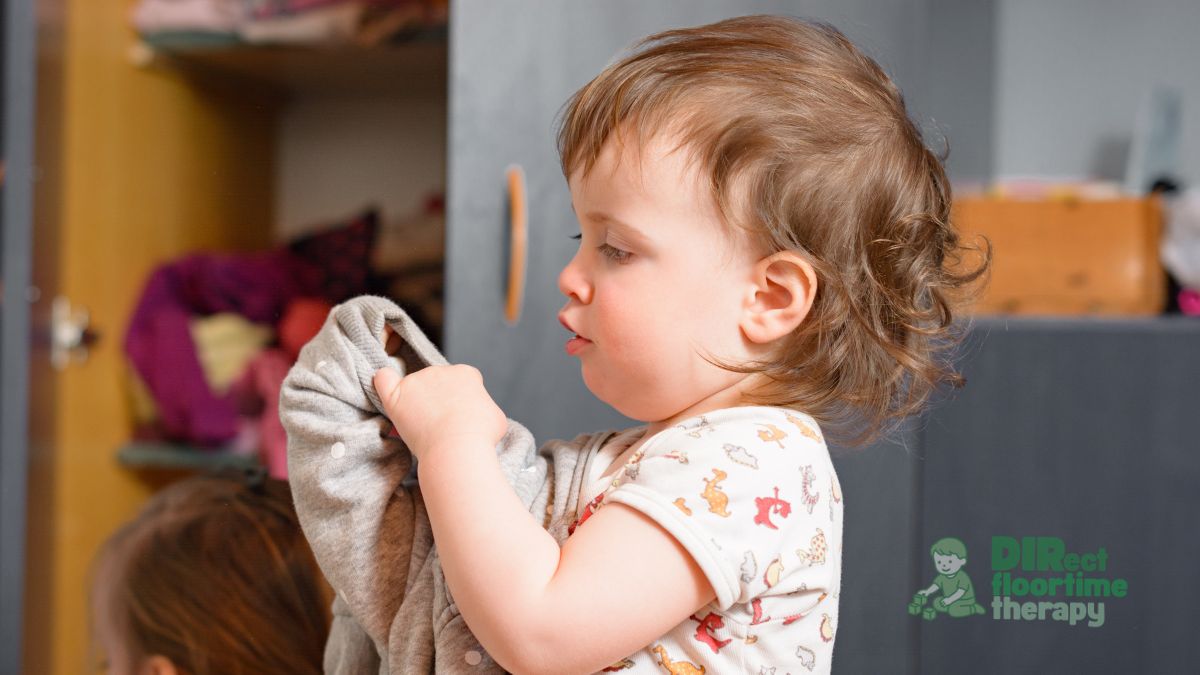
According to a landmark study by Pfeiffer et al. (2011) in the American Journal of Occupational Therapy, sensory processing issues are directly linked to challenges in “Activities of Daily Living” (ADLs). For a child in Westfield or Cherry Hill, the act of putting on a sweater isn’t just a chore; it is a complex sensory event that requires the brain to process texture, temperature, and pressure all at once.
The Role of Proprioception in Dressing
Dressing isn’t just about how things feel on the skin; it’s about knowing where your body is. Proprioception is the sense that tells you the position of your limbs without you looking at them. Occupational therapist A. Jean Ayres, the pioneer of Sensory Integration Theory, first described how disruptions in proprioceptive processing affect children’s ability to complete self-care tasks like dressing.
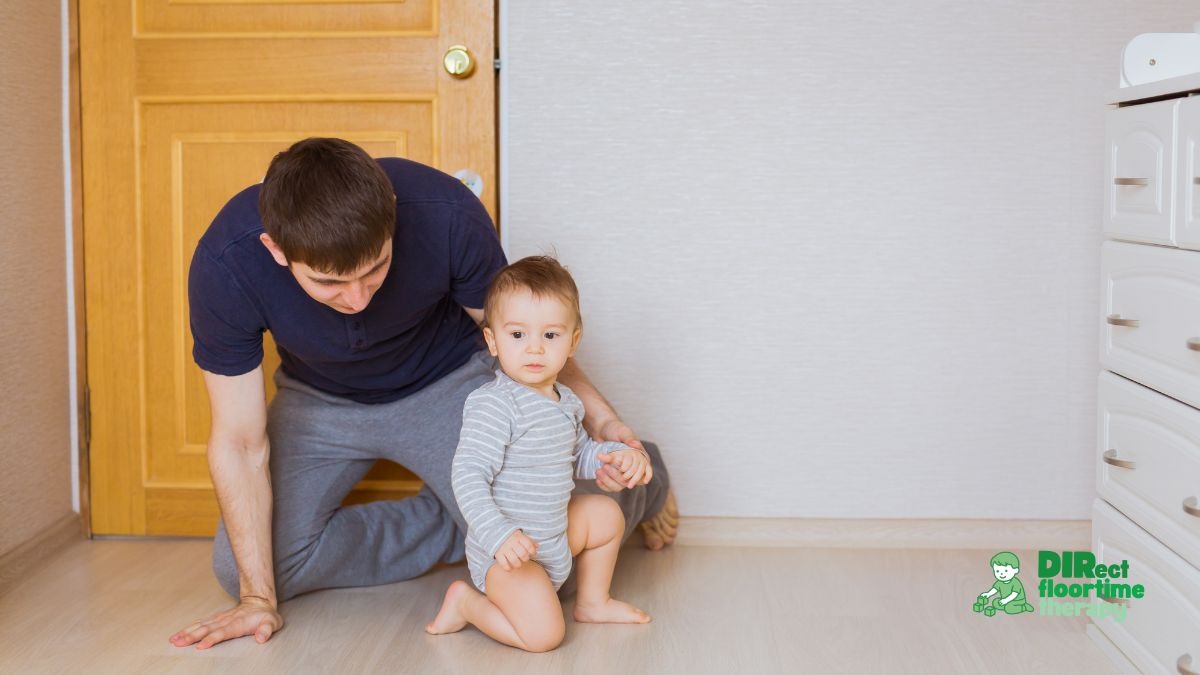
- The Struggle: An autistic child with poor proprioceptive processing might struggle to find the armhole in a shirt or feel “lost” when their head is momentarily covered by a t-shirt.
- The Result: This “body unawareness” leads to frustration, which then lowers the child’s threshold for tactile irritation. The “tag” feels worse because the child is already exhausted from the physical effort of dressing.

Why Morning Transitions Are the “Perfect Storm”
Morning routines in New Jersey are notoriously fast-paced. Between bus schedules and work commutes, there is little room for error. This time pressure is the enemy of the autistic nervous system. Research by Schaaf et al. (2011) demonstrated that sensory-related difficulties in daily routines, including dressing, are strongly associated with caregiver stress and family quality of life.
- Predictability: Autistic children thrive on knowing what comes next. The “unpredictability” of how a certain pair of pants might feel today creates high anticipatory anxiety.
- The “Stacking” Effect: If a child was woken up by a loud alarm (auditory stress) and had to eat a breakfast with a challenging texture (oral-tactile stress), their “sensory cup” is already nearly full by the time the clothes come out. Occupational therapy literature refers to this as “sensory load accumulation” or “sensory threshold depletion”.
In Livingston or Montclair, families often find that the “clothing meltdown” is actually the final straw in a long line of sensory demands.
The DIR/Floortime Approach: From “Commander” to “Consultant”
In many homes, the morning sounds like a series of commands: “Put on your shirt,” “Find your shoes,” “Hurry up.” In DIR/Floortime, we shift the focus to the Relationship. DIR (Developmental, Individual-difference, Relationship-based) was developed by Dr. Stanley Greenspan and Dr. Serena Wieder and is recognized by the American Academy of Pediatrics as a comprehensive model for supporting children with developmental challenges.
Building Agency and Shared Problem-Solving
The goal is to bring the child into the “circle of communication.” If the child hates the shirt, that is an opportunity for shared problem-solving—the 4th Developmental Milestone in the DIR framework, which Greenspan described as the capacity for complex, two-way problem-solving communication.
- Validate the Feeling: “Oh, I see. That tag feels like a scratchy monster. That’s no good!”
- Collaborate: “Should we use the soft blue shirt or the cozy gray one?”
- Investigate Together: Let the child feel the fabrics with their hands first. This gives the brain time to “prime” the tactile system before the fabric touches more sensitive areas like the neck or trunk.
Practical Strategies for NJ Mornings
- The “Sensory Buffet”: Lay out clothes the night before. Let the child touch them when they are relaxed, not when they are rushing.
- “Heavy Work” Before Dressing: Engaging in proprioceptive “heavy work”—like a “bear crawl” to the dresser or a big “squish” with a pillow—can help “wake up” the muscles and “calm down” the skin’s sensitivity. Proprioceptive input has been shown in occupational therapy research to modulate tactile defensiveness.
- Seamless and Soft: Invest in specialized clothing. Many NJ parents swear by bamboo fabrics, seamless socks, and tagless undershirts.
- Compression as a “Hug”: Some children find loose, “floppy” clothing distressing. A tight, compression-style undershirt can provide a consistent “hug” that helps the child feel secure throughout the school day. Research by Edelson et al. (1999) on deep pressure stimulation supports the calming effects of consistent tactile input for children with ASD.
Parent Coaching: Maintaining Your “Green Zone”
At Direct Floortime, we emphasize that your emotional state is contagious. If you are frustrated and pulling a shirt over a child’s head, they will perceive that touch as even more aggressive. Co-regulation research demonstrates that a caregiver’s regulated state is foundational to a child’s ability to self-regulate—which is why your calm matters as much as the clothing itself.
Strategies for Caregiver Regulation
- The 10-Minute Buffer: If possible, start the routine 10 minutes earlier than necessary. This “time cushion” allows you to stay in a calm, playful Floortime state even if a “clothing crisis” occurs.
- Parallel Dressing: Dress yourself while they dress. Model the “struggle” and the solution: “Whew, these socks were twisted! Let me fix them. Ah, much better.”
- Follow the Lead: If your child wants to wear their pajamas to school (and many NJ schools have “pajama days” or flexible dress codes), ask yourself: Is the battle worth the regulatory cost? Sometimes, the “win” is a regulated child getting to school, regardless of what they are wearing.
Integrating Success into the School Day
The clothing your child wears in Jersey City or Middletown affects their ability to learn. A child who is constantly distracted by a scratchy seam cannot focus on their teacher. A 2008 study in the American Journal of Occupational Therapy found that sensory processing difficulties were significantly associated with reduced participation and performance in school-based tasks.
Advocacy in the NJ School System
- IEP Accommodations: Ensure that your child’s sensory profile includes clothing sensitivities. Under the Individuals with Disabilities Education Act (IDEA), sensory needs can and should be addressed in Individualized Education Programs (IEPs). This might mean allowing them to wear a specific type of hat, keeping a “comfort” sweater in their cubby, or allowing them to opt-out of certain “spirit day” costumes that are sensory-heavy.
- Sensory Breaks: If a child is wearing “challenging” clothes (like a stiff school uniform), they may need more frequent proprioceptive breaks during the day to stay regulated.
Building Long-Term Sensory Resilience
By using Floortime at home, you are doing more than just putting on a shirt. You are teaching your child how to advocate for their needs. You are building a Relationship where they know their physical discomfort is taken seriously.
Research by Green & Ben-Sasson (2010) on sensory defensiveness found that when environments are modified to meet a child’s needs, their overall anxiety levels drop and their social engagement increases. Every morning that ends in a “high-five” instead of a “hand-over-hand” struggle is a victory for your child’s development.
FAQs
Why does my child want to wear the same outfit every day?
Predictability is safety. That specific outfit has a “known” sensory profile. It is a coping mechanism for an unpredictable sensory world. This pattern is consistent with research on restricted and repetitive behaviors in ASD, which often serve a regulatory function.
Are “seamless” socks actually seamless?
Usually, they have a “hand-linked” toe seam that is flat. For some highly sensitive children in NJ, even this is too much. Turning socks inside out is a common and effective “pro-parent” hack.
Should I force my child to “get used to” different fabrics?
No. Forced exposure to painful stimuli usually leads to increased defensiveness and a breakdown in trust. Desensitization should always be child-led and playful. This aligns with DIR/Floortime’s child-led approach and with occupational therapy guidelines, which caution against non-therapeutic sensory flooding.
What fabrics are best for autism?
Bamboo, modal, and high-quality organic cotton are typically the “gold standard” for tactile sensitivity due to their long, smooth fibers. Many sensory-specialized clothing brands have emerged specifically for this population.
Is clothing sensitivity related to the “after-school meltdown”?
Yes! A child who has “masked” their discomfort with an irritating shirt all day will often “explode” the second they feel safe at home. This phenomenon, sometimes called “autistic fatigue” or the “rebound effect,” is well-documented in the clinical literature.
From Morning Battles to Daily Success
The journey toward a peaceful morning starts with a shift in perspective. When we see the “tag” not as an excuse, but as a genuine physical hurdle, we can join our children in jumping over it.
At Direct Floortime, we help New Jersey families decode these sensory messages. We believe that with the right tools and a relationship-first approach, even the toughest morning routine can become a time of connection. Whether you are in Voorhees or Teaneck, we are here to support your family’s unique developmental path.
Contact Direct Floortime today to learn how our parent coaching can transform your daily routines.