Key Points
- The “Celebration Load” is a combination of unpredictable social expectations, high-intensity sensory input, and the pressure of “forced fun” that can overwhelm an autistic child’s nervous system.
- Predictability vs. Novelty is the core conflict: while parties are built on surprises, autistic children thrive on knowing exactly what happens next.
- DIR/Floortime Party Planning shifts the focus from “traditional milestones” (like singing “Happy Birthday” in a crowd) to “meaningful engagement” based on the child’s individual profile.
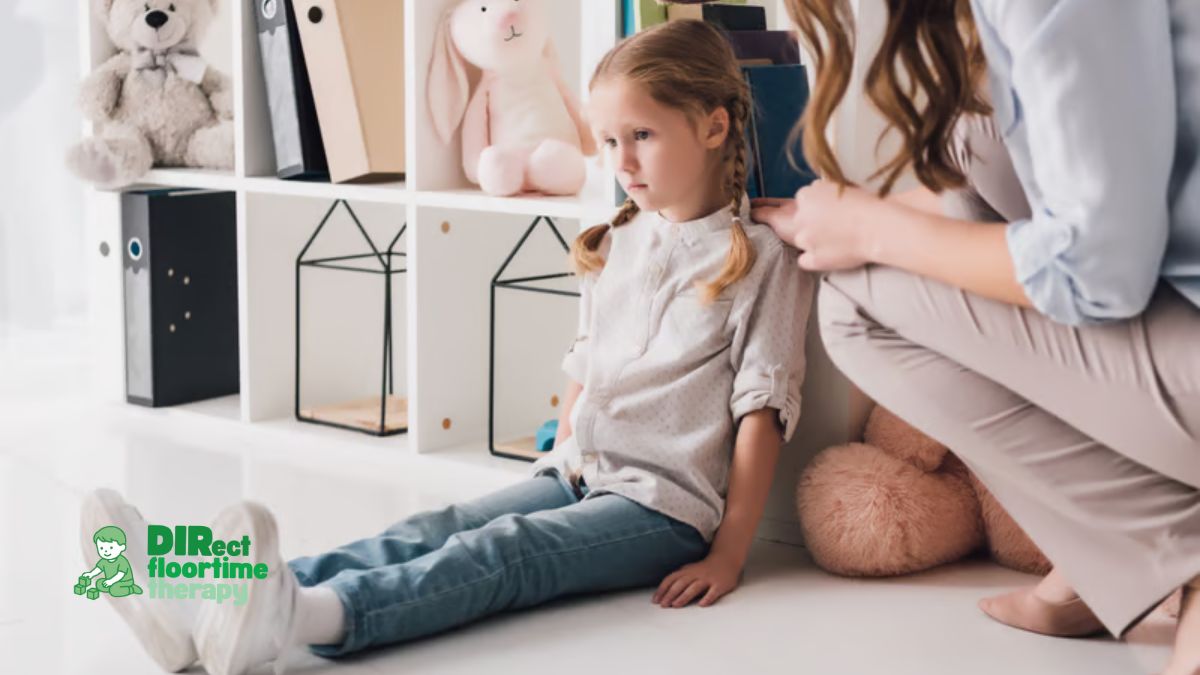
For a family in Montclair, New Jersey, the mailbox is often a source of anxiety. Each invitation to a classmate’s birthday party at a local bounce house or gaming arcade brings a wave of conflicting emotions. They want their six-year-old daughter to be included, to have friends, and to experience the magic of childhood celebrations. But they also know the reality: within twenty minutes of arriving at a typical NJ party venue, their daughter is usually huddled under a table with her hands over her ears, or she is mid-meltdown because the Happy Birthday song was too loud.
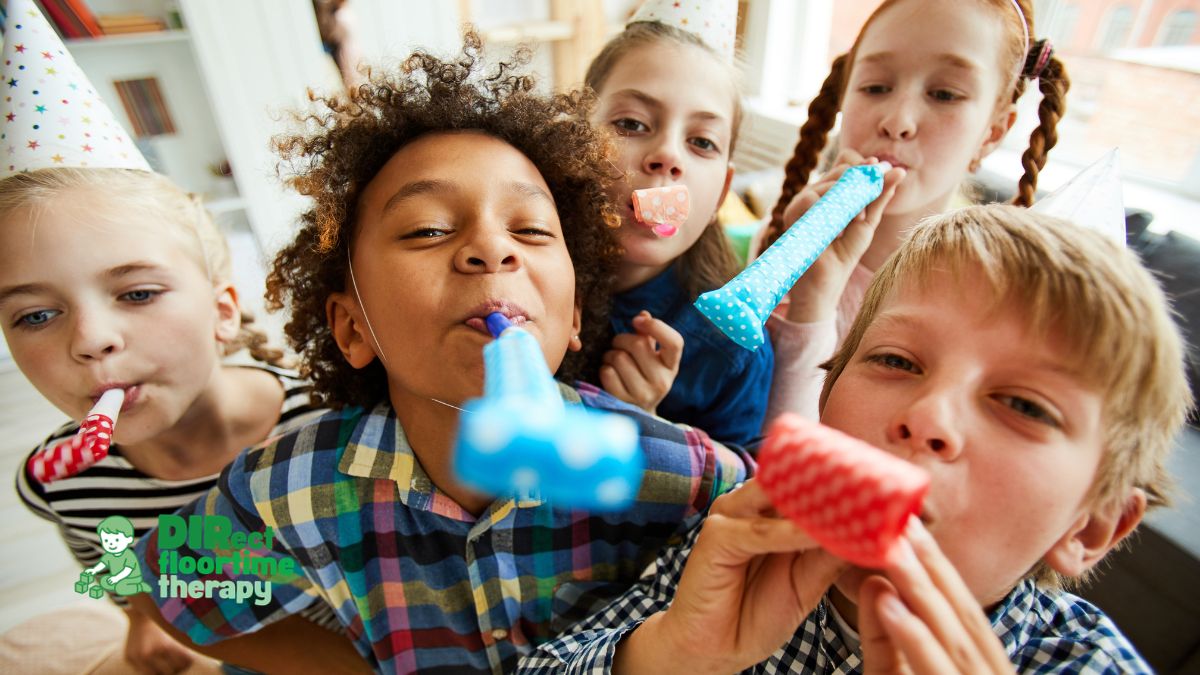
This is the Birthday Party Paradox. These events are designed for maximum joy, yet for many autistic children, they are the ultimate test of endurance. The very things that define a party, balloons popping, bright lights, loud music, sugar rushes, and a crowd of excited children, are the exact triggers for a sensory shutdown.
In the DIR/Floortime model, we look at the Individual-difference of how a child processes these high-affect environments. We don’t see the child as “spoiling the fun”; we see a nervous system trying to survive a hurricane of input. This article explores why traditional parties are so difficult and how NJ parents can rewrite the party script to ensure their child and the whole family can actually enjoy the celebration.

Deconstructing the “Party Storm”: A Sensory Analysis
To a neurotypical child, a party at a venue in Princeton or Livingston is a series of exciting surprises. To an autistic child, it is a series of unpredictable sensory assaults.
1. Auditory and Visual Overstimulation
As we discussed in Blog 1, many autistic children have acoustic hyper-reactivity. In a pump-it-up style venue, the combination of screaming children, loud music, and the constant whoosh of air blowers creates a wall of sound that makes it impossible to regulate. Research by Marco et al. (2011) in Pediatric Research confirms that auditory processing differences in ASD make high-noise environments disproportionately distressing. Add to this the visual noise of flashing lights and moving bodies, and the brain enters a state of high-alert.
2. The Olfactory and Gustatory Shift
Parties are full of strong smells, including pizza, cake, sweaty gym mats, and cleaning supplies. For a child with the olfactory sensitivities we explored in the cafeteria (Blog 8), these smells can be physically painful. Furthermore, the pressure to eat party food can be a major stressor for children with tactile defensiveness related to food textures. Research on food selectivity in ASD by Cermak, Curtin, and Bandini (2010) confirms that sensory sensitivity is one of the primary drivers of food refusal in autistic children.
3. The Unspoken Social Expectations
Traditional parties have a rigid, albeit unwritten, social sequence:
- Arrive and greet the host (High social demand).
- Play organized games (High executive functioning demand).
- Sit together for cake (High sensory/proximity demand).
- Open gifts (High performance demand).
For a child in Cherry Hill or Middletown, navigating these steps while their sensory system is already redlining is an impossible task. Research by Rao and Beidel (2009) in the Journal of Autism and Developmental Disorders confirms that unstructured social environments produce significantly higher anxiety in autistic children than structured ones.
The DIR/Floortime Perspective: Moving Beyond Compliance
Traditional social skills training might focus on teaching a child to wait their turn or smile for the photo. In DIR/Floortime, we prioritize Engagement and Affect. We would rather a child be happily playing with one toy in a quiet corner than compliantly sitting at a table while in a state of internal panic.
1. Following the Lead (Even at a Party)
If your child’s lead at a party is to spend 45 minutes watching the ceiling fan in a quiet hallway, a Floortime approach says: Follow them. Join them in that hallway. Use that quiet moment to co-regulate. By honoring their need for space, you are maintaining the Circle of Communication (see Blog 3) rather than breaking it by forcing them into the main event.
2. Shared Problem-Solving for the Environment
Instead of expecting the child to cope with the venue, we use shared problem-solving to modify the experience. This might mean:
- The “Early Entry” Strategy: Arrive 15 minutes before the other guests so the child can explore the room while it’s quiet.
- The “Safe Zone”: Identify a recharge station such as a car, a quiet corner, or a sensory tent where the child can go whenever they feel the pressure rising.
Redefining the “Birthday Milestone” for NJ Families
If you are hosting the party for your child in Hoboken or Ridgewood, you have the power to throw the traditional rulebook away.
1. The “Sensory-First” Celebration
- Skip the Song: If the Happy Birthday song is a trigger, don’t do it! Light the candles and blow them out silently, or have everyone jazz-hand instead of singing.
- Activity-Based Parties: Instead of a generic play place, choose an activity based on your child’s Individual-difference. If they love water, have a small splash pad party. If they love trains, visit a local NJ railway museum with just two close friends.
- Ditch the “Surprise”: Surprises are often terrifying for autistic children. Research on predictability and anxiety in ASD consistently shows that advance preparation through social stories and visual schedules significantly reduces distress. Give your child a social story or a visual schedule of their own party days in advance.
2. Prioritizing Quality over Quantity
A successful party isn’t defined by the number of guests. For many families in Westfield or Teaneck, a Party of Two, the child and one preferred peer, is more developmentally meaningful than a Party of Twenty. Research by Kasari et al. (2011) on friendship quality in autism confirms that the depth of a single friendship is a stronger predictor of well-being than the breadth of a social network.
Parent Coaching: Managing the “Social Pressure”
At Direct Floortime, we coach parents across New Jersey to handle the eyes of other parents. The hardest part of a party meltdown is often the feeling of being judged by neurotypical families who don’t understand the sensory storm.
Shifting the Narrative
- The “Elevator Pitch”: Have a simple sentence ready for other parents. “She’s having some sensory overload right now, so we’re going to take a break in the quiet zone. We’ll be back soon!”
- Setting Boundaries: It is okay to leave a party early. If your child has reached their limit after 30 minutes, celebrate that 30-minute success and head home. Don’t push for the full two hours at the expense of their nervous system.
Integrating Success into the NJ Social Calendar
As your child grows, their social world in Jersey City or Lakewood will expand. Building party resilience starts with small, successful experiences.
Advocacy and Preparation
- Communication with the Host: Don’t be afraid to send a friendly text to the host parent. “We’re so excited to come! Our son has some noise sensitivities, so we might bring his headphones and step out for breaks. Just wanted to let you know!” Most NJ parents are incredibly supportive once they understand the context.
- The “Party Bag” (For Your Child): Pack a specialized bag for every event. Include noise-canceling headphones, a favorite fidget, a safe snack (in case the pizza is wrong), and a sensory weighted lap pad.
From “Surviving” to “Thriving” in Social Circles
Birthday parties don’t have to be a source of trauma. By understanding the sensory mechanics of the Party Paradox and applying DIR/Floortime principles, you can turn these events into opportunities for genuine connection.
Research by Eaves and Ho (2008) on quality of life in autism shows that when environments are adapted to meet sensory needs, autistic children show significantly higher levels of engagement and social joy. We aren’t avoiding the world; we are translating the world into a language our children can understand.
FAQs
How do I explain to my child why we are leaving the party early?
Focus on their body. “I can see your body is feeling a bit loud right now. Let’s go to the car to get some quiet so we can feel better.”
My child wants to go to parties but meltdowns every time. What do I do?
This is a sign of a communication gap. They want the social connection but don’t have the regulatory tools for the environment. Use the graduated exposure techniques from Blog 8, starting with very short 15-minute visits. Research by Bellini and Akullian (2007) on video modeling also shows that watching videos of social situations in advance can significantly reduce anxiety during the real event.
Should I force my child to open gifts in front of people?
No. Many children find the eyes-on-me pressure of gift-opening to be extremely dysregulating. It’s perfectly fine to open gifts at home the next day.
How do I find “sensory-friendly” venues in New Jersey?
Many NJ venues now offer Sensory Sundays or private bookings where they turn off the music and dim the lights. Ask specifically for low-sensory options when booking. The Autism Society of New Jersey also maintains a directory of sensory-friendly events and venues across the state.
What if my child isn’t “invited” to parties?
This is a painful reality for many families. Focus on building micro-communities. Host a one-on-one play date at a local park. Deep connection with one friend is more valuable than a surface-level invite to a large party.
Celebrating Your Child, Their Way
Your child’s birthday, and the birthdays of their friends, should be a celebration of who they are, not a test of how well they can mask. By advocating for their sensory needs and following their lead, you are teaching them that their comfort and regulation matter.
At Direct Floortime, we help families across New Jersey navigate the social complexities of childhood. Whether you are in Voorhees or Maplewood, our team is here to help you create a social world that fits your child, rather than forcing your child to fit the world.
Contact Direct Floortime today to learn how to build your child’s social confidence through relationship-centered support.
The challenges of the party, the school, and the home all converge when we look at the big picture of a child’s development. In our final blog, we’ll look at how all these pieces fit together into a lifelong journey of DIR/Floortime growth. Continue reading in Blog 10.