Key Points
- The school cafeteria sensory profile is uniquely overwhelming, combining high-decibel echoes, unpredictable visual movement, and intense olfactory (smell) triggers.
- Executive functioning demands peak during lunch and recess, where the loss of classroom structure forces autistic children to navigate complex social “unwritten rules” without support.
- IDEA Part B advocacy allows New Jersey parents to request specific sensory accommodations, such as quiet lunch environments or graduated exposure protocols.
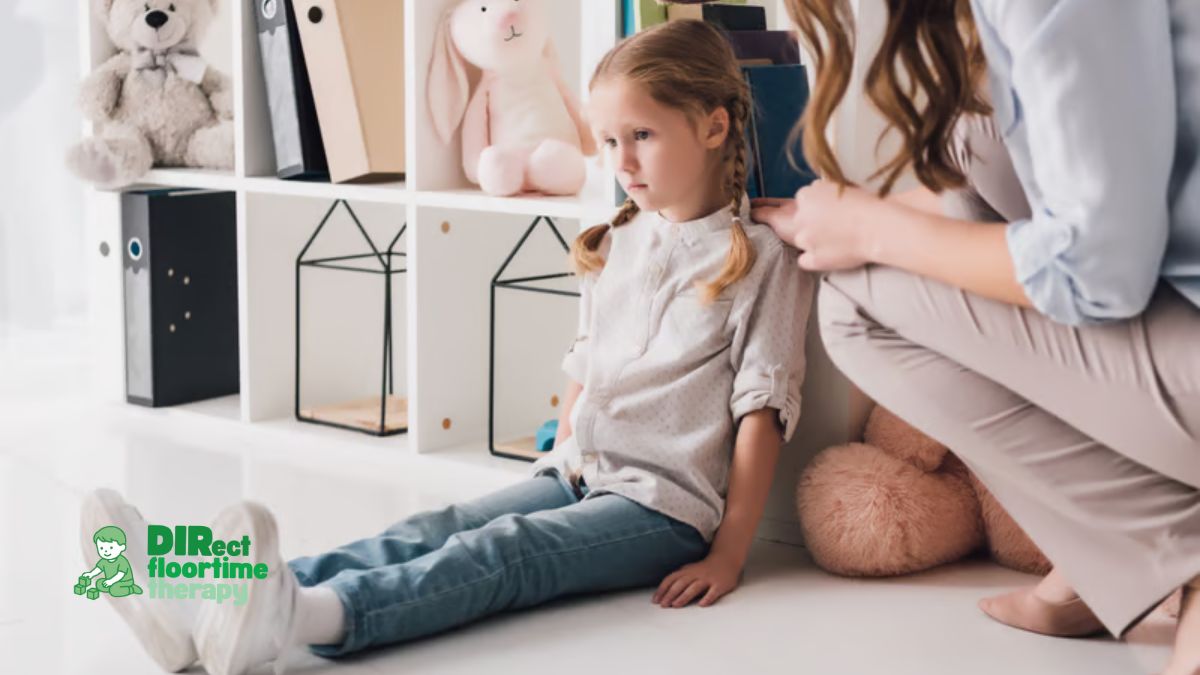
In Maplewood, New Jersey, a third-grade boy spent nearly the entire school year eating his lunch in the nurse’s office. To his teachers, it seemed like a “preference” for a quiet space, but to his parents, it was a signal of a deeper struggle. Every time he entered the school cafeteria, he experienced a meltdown within four minutes. He described the room not as a place to eat, but as a “room made of screaming and bad smells.” While his peers were socializing and refueling, his nervous system was in a state of total high-alert.
For many autistic children in the NJ school system, the cafeteria is the most challenging environment they encounter all day. In the classroom, there is a teacher, a desk, and a predictable schedule. In the cafeteria, the scaffolding of the school day disappears. It is a place of sensory chaos and social unpredictability.
By applying the DIR/Floortime lens, we look at the Individual-difference of how a child’s sensory systems, auditory, visual, olfactory, and tactile, react to this specific environment. We move beyond simply “excusing” the child from the room and instead look at how we can build their regulatory capacity and advocate for the right environmental supports. This article maps the sensory assault of the lunchroom and provides a guide for NJ families to secure the accommodations their children deserve.

The Sensory Profile of a School Lunchroom
To a neurotypical brain, the cafeteria is just a noisy room. To an autistic child in Princeton or Livingston, it is a multi-system sensory attack.
1. The Auditory Assault: Acoustic Hyper-Reactivity
School cafeterias are often built with hard, reflective surfaces, including cinder block walls, linoleum floors, and plastic tables. These materials cause sound to bounce, creating a high-decibel echo.
- The Research: A study by Kinnealey et al. (2012) in the American Journal of Occupational Therapy found that sound-absorbing panels significantly reduced off-task and distressed behaviors in children with sensory processing differences.
- The Impact: For a child with the auditory sensitivities discussed in Blog 1, the sound of 200 children talking, combined with the clatter of trays and the hum of industrial refrigerators, makes it impossible to process social cues.
2. The Olfactory (Smell) Overload
The cafeteria is a concentrated zone of smells, including cleaning chemicals, heated-up food, and the scent of hundreds of bodies in close proximity. Research on olfactory hypersensitivity in ASD by Tavassoli and Baron-Cohen (2012) confirms that for a child with hyper-osmia (over-sensitivity to smell), these odors can trigger genuine nausea or a gag reflex, making the act of eating physically impossible.
3. The Visual and Tactile Chaos
The visual environment is busy. Children are running, lights are flickering, and there is no clear boundary for personal space. The tactile threat of being bumped by a peer or touching a sticky table can keep a child in tactile defensiveness (see Blog 2) for the entire lunch period.
Why the Loss of Structure Leads to Meltdowns
Beyond the sensory input, the cafeteria represents a loss of regulatory scaffolding. In the classroom, the child knows where to sit and what to do. In the cafeteria, the rules are unwritten.
Executive Functioning and Social Navigation
Autistic children often struggle with executive functioning, the brain’s ability to plan, organize, and execute tasks. Research by Hill (2004) in the Journal of Child Psychology and Psychiatry confirms that executive functioning deficits in ASD directly impact a child’s ability to initiate, transition, and problem-solve in unstructured environments.
- Initiating: “Where do I sit?”
- Transitioning: “When do I throw my tray away?”
- Social Problem-Solving: “How do I join a conversation without being teased?”
When a child in Cherry Hill or Middletown is forced to manage these complex social demands while also battling a sensory storm, their regulatory cup overflows. The resulting meltdown is the only way their body knows how to say, “I am overwhelmed.”
The DIR/Floortime Approach: Building a Bridge to Inclusion
In DIR/Floortime, we don’t believe in “sink or swim” inclusion. We believe in building the Social-Emotional Foundations so the child can eventually participate in a way that feels safe. Greenspan and Wieder’s framework emphasizes that genuine inclusion requires meeting the child at their current developmental level, not forcing them to perform at a level their nervous system cannot sustain.
1. Graduated Exposure and Shared Problem-Solving
Instead of forcing a child to stay in the cafeteria for 30 minutes, we work with NJ school teams to create a Graduated Exposure Protocol. Research by Koegel et al. (2012) on pivotal response treatment supports the use of graduated, child-led exposure for building tolerance to challenging environments.
- Phase 1: The child enters the empty cafeteria with a favorite safe person when no other children are there. This builds a memory of the room being safe.
- Phase 2: The child eats for five minutes with one quiet friend before the rest of the school arrives.
- Phase 3: The child stays for the duration but wears noise-canceling headphones and has an exit pass they can use if they feel overwhelmed.
2. The “Safe Base” Strategy
Every autistic child needs a safe base in the cafeteria, such as a specific seat at the end of a table, near an exit, or in a quiet zone identified by the school. Having a predictable physical spot reduces the executive functioning load.
Parent Advocacy: Using IDEA and NJ State Regulations
New Jersey parents have significant rights under the Individuals with Disabilities Education Act (IDEA) Part B. If the cafeteria is preventing your child from accessing a Free and Appropriate Public Education (FAPE), the school is legally required to provide accommodations.
Requesting Sensory Accommodations in Your IEP
When you sit down with your child’s Child Study Team in Westfield or Teaneck, be specific about the sensory profile of the lunchroom.
- Noise-Canceling Technology: Request that the school allow and encourage the use of high-quality headphones during lunch.
- Alternative Dining Environments: It is a valid IEP accommodation to allow a child to eat in a classroom or a sensory room with a small group of peers.
- Acoustic Modifications: Advocate for the school to install sound-absorbing materials or quiet zones in the cafeteria.
- Sensory Breaks: Ensure the child has a pre-lunch and post-lunch regulatory break to reset their nervous system.
Parent Coaching: The “Regulatory Reset”
At Direct Floortime, we coach parents in Ridgewood and Hoboken to look at the cafeteria as a regulatory drain.
Strategies for the School Day
- The “Sensory Diet”: Work with your Occupational Therapist (OT) to ensure your child is getting heavy work (proprioceptive input) before lunch. Research by Watling and Dietz (2007) confirms that sensory diet interventions reduce maladaptive behaviors and improve readiness for challenging tasks.
- Communication with Staff: Ensure the lunchtime monitors understand that your child isn’t “being difficult”. They are managing a disability. A simple thumbs up/thumbs down check-in can help a non-verbal child signal their distress level.
Integrating Success into the NJ School Environment
The goal isn’t necessarily for every child to eat in a loud cafeteria; the goal is for every child to have a successful social experience.
Advocacy Beyond the Lunchroom
- Peer Education: Encourage the school to foster a culture of inclusion where peers understand that some friends need a quiet lunch or headphones.
- Staff Training: Many cafeteria workers in NJ districts aren’t trained in autism. Advocating for a simple 30-minute sensory awareness training can change the lives of dozens of students. The Autism Society of America provides free staff training resources that schools can adopt.
From “Escaping the Room” to Engaging in Life
The school cafeteria is a high-stakes environment, but with the right accommodations and a DIR/Floortime approach, it can become a place where a child learns to navigate the social world. By acknowledging the body in distress and supporting the communication beneath the words, we prepare our children for the school and social world.
Research by Ashburner, Ziviani, and Rodger (2008) in the American Journal of Occupational Therapy shows that when sensory needs are met in school settings, academic performance and social-emotional well-being improve dramatically. We aren’t just fixing lunch; we are building a foundation for a successful school career.
FAQs
Is it “unfair” to let my child eat in a separate room?
No. Inclusion is only effective if it’s meaningful. If a child is in a state of fight-or-flight, they aren’t being included. They are being overwhelmed. A quiet lunch with two friends is a much more inclusive social experience than sitting alone in a loud room.
How do I know if the cafeteria is the problem?
Look at the after-school meltdown pattern (Blog 7). If your child is significantly more dysregulated on days they ate in the cafeteria compared to days they were in the nurse’s office, the cafeteria is a likely trigger.
What are “sound-absorbing panels”?
These are acoustic treatments designed to stop sound from echoing. Many NJ schools have them in music rooms but forget to put them in the largest, loudest room, the cafeteria.
Should I send a “sensory bag” to lunch with my child?
Yes! A small bag with a fidget, noise-canceling headphones, and perhaps a scented eraser (to mask food smells) can be a life-saver.
What if the school says “we don’t have the staff” for a quiet lunch?
Under IDEA, lack of staff is not a legal excuse to deny an accommodation that is necessary for a child to access their education. Contact an advocate or the NJ Department of Education if you hit this wall.
Standing Up for Your Child’s Right to a Calm Lunch
Every child in New Jersey deserves a lunch break that actually allows them to break. By advocating for sensory-smart environments and utilizing the DIR/Floortime model, you are ensuring that your child’s school day is defined by growth, not by survival.
At Direct Floortime, we help parents across the state become powerful advocates for their children’s school experience. Whether you are in Voorhees or Maplewood, our team is here to help you navigate the IEP process and build a supportive school and social world.
Contact Direct Floortime today to learn how to turn the hardest room in the school into a place of success.
If the cafeteria is where the sensory world overwhelms your child during the school day, the birthday party is where the social world does the same, and the two environments share more than most parents realize. Continue reading in Blog 9.